Thursday, July 26, 2012

American greatness? 'That dog won't hunt'

Saw this on Twitter about Mitt Romney's 2010 book, No Apology: The Case for American Greatness:
England is just a small island. Its roads and houses are small. With few exceptions, it doesn't make things that people in the rest of the world want to buy. And if it hadn't been separated from the continent by water, it almost certainly would have been lost to Hitler's ambitions. Yet only two lifetimes ago, Britain ruled the largest and wealthiest empire in the history of humankind. Britain controlled a quarter of the earth's land and a quarter of the earth's population.
The tweet motivated me to write the following send-up of the USA (apologies to Yankee pals). The focus is on HUGE as opposed to SMALL.

Title comes from when I first heard the expression: Ross Perot's quip in 1992 US Presidential campaign, "That dog won't hunt." (meaning fuggedaboudit)

HUGE SIZE
United States is just another huge country. Not as big as Russia or Canada but still huge.

Does size matter? Hard to say when little Norway's doing fine:
So rosy are its books and so high its standard of living that it has been rated No. 1 on the UN's Human Development Index for nine of the first 11 years of this century.
HUGE ROADS and HOUSES
US roads and houses are huge, which helps explain why, like much of the developed world, it's a huge energy consumer.
Americans, make up only 4% of the world's population, operate 33% of its automobiles and consume 25% of the world's global energy supply.
All of this will eventually have huge consequences.

HUGE FOOD SERVINGS | HUGE OBESITY RATE

Its restaurant food servings are huge, and its fast food outlets are hugely popular, helping to explain why its adults and children have the highest levels of obesity on earth.
HUGE ARMS MANUFACTURER
USA is the world's single largest manufacturer. It makes some things that people in the rest of the world don't want to buy, e.g., huge gas guzzling cars. 

Other products sell well, e.g., USA is the world's largest exporter of arms (weapons of death and destruction) and dominates international arms markets.

US is also famous for its silicon valley and companies like Apple and Microsoft. But many of their jobs are done by cheap labour overseas.

HUGE PRISON POPULATION
USA is huge too when it comes to imprisoning its population, even more than in Stalin's gulags. Some states have huge prison populations:
HUGELY GUN-TOTING
USA has a long-standing gun culture. As a Canadian, it scares the hell out of me, and I suspect most citizens from developed countries around the world.
Nutballs in many countries have committed mass murder with firearms, but none quite so much as USA:
To think the NRA can control American elections by targetting pro-gun control politicians is puke-inducing.
HUGELY EXPENSIVE HEALTH CARE
US health care costs dwarf costs of other countries. But outcomes are not necessarily better:
The U.S. has the highest health spending per capita among peer countries, yet it fares poorly on life expectancy, infant mortality, and premature mortality.

Interesting OECD overview: Why is health care spending in USA so high? Example:
  • USA per capita spending (2009): $7598 | Canada: $4139
Multiple factors but having a single payer saves mega-bucks in administrative costs.

HUGELY LAGGING IN EDUCATION (MATHS, SCIENCE)

USA does not score well on international tests of maths and science. Although it has some of the world's finest universities and continues to lead in Nobel Prize winners, when it comes to K-12 and most universities, mediocrity reigns. US students consistently score poorly compared to other nations.

Frankly, when nearly 50% of Americans believe God created mankind in a single day ~ 10,000 years ago, science is dead in the USA. 

This finding scares the hell out of me:
HUGELY RELIGIOUS
US is also huge when it comes to religion. For example, most Americans (59%) report that religion plays a "very important" role in their lives, a proportion unique among developed nations.

US politicians constantly refer to God and religion. Frankly, this is unheard of in other western countries. USA is just like Islamic countries in this regard.

HUGELY APATHETIC TO HITLER
After WWI America wasn't keen on getting involved in another European war. Famously, FDR had to work indirectly to help Britain. 

From 1939 to 1941, Britain, Commonwealth countries like Canada and Australia, and Europe (except for Italy & Spain) fought Hitler alone. Gives an ironic chuckle to watch US war films that create that impression that Yanks single handed won WWII.

If the USA hadn't been bombed by Japan in 1941, it likely would have let England and the rest of the world fall to Hitler. Just think, no more Jews, no more Roma, no more handicapped.

HUGELY XENOPHOBIC
Once noted as the world's melting pot, post 9/11 the US is rather xenophobic. No more 
  • Give me your tired, your poor,Your huddled masses yearning to breathe free,The wretched refuse of your teeming shore.
Today, Canada is more open to immigrants:
As noted on Fareed Zakaria's GPS, Canada is a nation with more foreign-born per capita than the US and Canada has 'got it right.'

HUGE HOUSING CRISIS
The US sub-prime housing crisis almost brought the entire world economy down. Why? 

Many complex reasons but mainly because under their system Americans could buy homes they couldn't afford,  greedy bankers were delighted to oblige, and later sold worthless assets to foreign investors.
SHINING CITY UPON A HILL?
Yet just over 2 centuries ago the American Revolution was a prelude to the French Revolution and the rise of democracy in Europe. 

In 1835 the US was celebrated, warts and all, by Alexis de Tocqueville in his book, Democracy in America.

USA is hugely celebrated by its own citizens within its own shores, a shining city upon a hill.

On American TV you often here phrases like greatest country on earth, only in America, and most diverse

In reality, today's USA is not the greatest of anything unless you count incarceration, obesity, and religious rates. Oh yes, and greatest military power.

Even freest and most democratic country is subject to debate.
Note: Links to above report have changed:
BOTTOM LINE
I know many Americans and they are almost always universally kind and generous and smart. Maybe it's because they're mainly health care workers.

The same country that spawns the Tea Party and fundamentalist Christians, who I think of as right wing nut jobs, also counts among its citizens some of the most balanced and greatest thinkers the world has ever seen.

Nonetheless, the excerpt from Mitt's book seems to speak to an underlying arrogance. Maybe not, but I wonder. Hence this send-up.

It's worth remembering that to mention weaknesses is to care.  I used to tell students how feedback is an indispensable tool and how an appropriate response to criticism is, "Thanks for telling me that." 

In conclusion, as CNN's Wolf Blitzer often says, it's huge, huge! Seems America is never small, small. Too bad.

Just for fun: 
As always, comments are most welcome.

Wednesday, July 25, 2012

NIMBY, a Canuckastan family feud over a pipeline

Updated: 6 May 2015 (Fixed broken links)
I'm Christie from Bee-Cee, part of the clan Canuckastan, who lives on a beautiful property with forests, rivers, lakes, and a long, long sea front. Our property's natural wonders are so great some have even called my home, 'super natural BeeCee.'

Like Canuckastans of yore, we earn lots of money as hewers of wood and gatherers of water. Our pride and joy are our trees and fish, and we welcome visitors who come to enjoy our beauty.


My neighbour Allie, also a Canuckastanian and current head of its 40-year Albertastan sect, and I generally get along fine except for those times in the 1970s and '90s. That's when when she claimed our Bee-Cee sect went rogue and spouted too much leftie nonsense about helping the poor and protecting the environment.

Allie's clan is more into being rugged individualists. To hell with collective action to help the group, they say. Survival of the fittest rules, and the weak should be helped by their nearest and dearest, assuming they have some. If not, tough titty.

Allie herself, however, is educated, urbane, and well travelled. Unlike many of her predecessors, she's well spoken and, horror of horrors to some Albertastanians, reasonably open to the leftie-notion of the benefits of group action.

Rugged individualism aside, Allie's family is lucky because they discovered oil on their land, and her kids have pretty much been on a gravy train ever since. Still, they think of themselves as hard workers who earn every penny and deserve their good fortune. Those to the east, who mostly lack oil, are apparently slackers.

The rest of the Canuckastan clan, especially those arrogant relatives to the east, are viewed as bastards who can freeze in the dark, at least according to a more politically incorrect Albertastan leader of the past, King Ralph.

Thankfully, we live to the west of Allie and, except for revelling in our beauty, are not particularly arrogant. Now that we're not leftie-rogue anymore, Allie wants to put a big pipe across our property so she can send the oil on her property to her new friends across the Pacific and make a lot of money ($81 billion in tax revenue over 30 years).

At first I said, "Sure, but you should give my family a share of what you make." Allie said, "How about 17%" and without thinking I replied, "Great!"

To my surprise, my family hit the roof. Some said we need much more, since we will assume 100% of the risk if the pipe springs a leak, which pipes, being pipes, always do sooner or later.

No way, other family members said. If that damn thing leaks, we'll lose everything. They'll try to clean it up but it'll take years and in the meantime we'll suffer and may even go bankrupt.

Moreover, boats carrying oil are bound to run aground and  spill their cargo sooner or later, same with drilling wells. The 2010 BP spill is just the latest in a long line of disasters.

Screwing up my courage to prevent a family revolt, I asked Allie if we could have a bigger share of the earnings. To my utter surprise, the urbane Allie turns out to be real SOB.

"No way!" she screams. "This isn't the Canuckastan way. Our cousins to the east, even those who've sometimes gone leftie-rogue, have hauled their crappy potash, uranium, and assorted rag-bags across my property and not asked for anything. Even you have lugged your damn trees across my land for free."

Stunned, I don't know what to say. But I suspect immediately that transporting logs and minerals by truck or train doesn't present the same risk as oil flowing through a pipe.

Secretly, I think Allie is afraid of Dannie, her upstart competitor for head of the Albertastan sect. Dannie, normally a champion of bozo-outbreaks and everyone's right to be a redneck Albertastanian, sounds rather conciliatory these days.

SO WHAT? (Learning Points)
Likely lose-lose, but it's one hell of a family fight and critical for the future of Canuckastan.

Seriously, if 'Mike from Canmore' wanted to run a pipe carrying oil through your yard, would you let him, for any amount of money?

Perhaps the target should be Enbridge? USA regulators call them Keystone Kops.

And for old time's sake, Joni's classic
Comments are most welcome.

Monday, July 16, 2012

Has technology exceeded our humanity? (A great ape muses on our path to digital blindness).

Updated: 17 Feb. 2018 (Mostly fixed links)

Many have written about technology and how it affects and may negatively affect humans and our evolutionary path as great apes.

Many techies see anti-tech as a boring story told by modern day Luddites.

Others see information technology and the Internet, including its creepy aspects, as just the unfamiliar that we will get used to:
  • You know, things like breaches of personal privacy by Google or Facebook and selling us to advertisers. We need to be 'cool with that' or risk being considered Luddites.
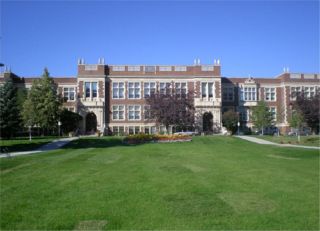
This blog documents some of my observations from everyday life based on daily walks around lovely Corbett Hall at the University of Alberta in Edmonton, Alberta, Canada.

Corbett Hall is only a block away from where my husband and I live in an apartment complex whose tenants are mainly university students and health professionals working at UAH, mostly the former.

Typical Day
Went down in the elevator with 2 young people. Both were texting on their cell phones. No eye contact with anything but the tiny screens.

On Whyte Avenue a young man who was texting would have walked into me if I hadn't shouted "Hey!" This happens more and more often. He wasn't plugged into an ipod so could hear me.

At corner of Whyte and 112 Street, when the red light changed to green, I was nearly run over by a car turning right whose driver, a young woman, was on her cell phone, even though it's illegal here.

Lovely summer day. In the trees along Whyte Avenue and around Corbett Hall birds cheeped. Peregrine falcons nesting on the nearby Clinical Sciences Bldg, where I worked for 22 yrs+, soared and screeched.

A group of ~12 very short people from the nearby daycare centre marched arm in arm in a long line down the lawn and eventually began to frolic about while being supervised by daycare staff. Much giggling and gurgling by joyous toddlers.

A lone jack rabbit suddenly hopped across the lawn and through the parking lot to the adjoining large sports field.

Walked across the sports field to University Avenue and was accompanied by a whirring squadron of dragon flies, the flying aces of insect world.

Rounded a corner of Corbett Hall where the smell of lilacs still lingers.

Several students sat at the tables in front of Corbett. Many were texting.

Passed several students who had ipods (or similar) connected with earbuds.

Someone passed me and said hi, but when I turned to return the hello I saw he was on his cell phone using a microphone headset with microphone.

Was temporarily startled by a young man who whizzed by on his skateboard.

Dropped into Sobeys for a coffee. At next table sat 3 young people. One talked on her cell phone, one texted, and the other looked a bit forlorn. The phone conversation was the American 'valley girl speak' typical of most young Canadians for years now.
"I was like, 'She's such a crappy prof.' And he goes, 'That is so true. What a c_nt!' Many more I was like and he goes with numerous gratuitous expletives thrown in.
As someone who 'grew up' in the 60s, I've said many vulgarities at one time or another but not in a neighbourhood cafe in a loud, giggly voice, including when I was an immature 18.

At end of walk, returning home along Whyte, I passed a frail white-haired woman using a walker who met my greeting of "It's sure a lovely day" with a smile and replied, '"Wonderful, just wonderful."

Stopped as usual to smell the wild roses and other flowers planted along the avenue.

Went up in the elevator with 3 young tenants, all of whom were texting.

MUSINGS
I have a cell phone, desktop computer, laptop, digital recorder, digital camera, ipod, ipad and was an early adopter of Internet technologies.

For 12 years I've made a living mainly as a self-taught webmaster, turning knowledge of transfusion science, education and the Internet into a post-teaching career. None of it would be possible without the generosity of colleagues.

As well, as a way to share interesting resources and news, or to vent about perceived injustices, but mostly I blog just for fun.
and Tweet:
After nearly 20 years of using  computers at work, I'm all but positive (who can be 100% sure of anything?) that nothing particularly important happens when sitting in front of a computer.

Certainly nothing we'll remember on our deathbeds. Instead of Citizen Kane's 'rosebud' few of us will call out 'iphone' or i-anything.

To me it's a no-brainer to appreciate what's real and take care to enjoy the natural world. All too soon we will lose the 5 senses our human bodies enjoy and enter the never-ending void called death.

I'm 'cool with that.' Someone, probably a Buddhist (forget who) once said the equivalent of, "I never worried about the millions of years I didn't exist before birth, so why be concerned about the eternity I won't exist after death?"

Hence, to live in the present we must be aware of our senses.  The ideas in Jon Kabat-Zinn's book Coming to Our Senses seem reasonable to me.

Nature is precious. It's everything worthwhile on our tiny 'pale blue dot,' as Carl Sagan put it. Einstein's famous line (about quite a different technology) seems appropriate:
  • It is appallingly obvious our technology has exceeded our humanity. 
As to evolution of our branch of hominids, I'd guess that many of us are becoming blind, totally unaware of our surroundings. Maybe aware of digital sounds and images but not to real 'in-the-flesh' sights and sounds of natural life.

Over time, my guess is that we'll develop enormous thumbs, much like the troglodytic Morlocks of H.G. Wells' The Time Machine developed huge eyes. And we'll only be able to communicate digitally.

Who knows, maybe our thumbs will give us so much pleasure that they'll evolve into our sex organs. Can already hear the thumb envy, 'Mine's bigger than yours.' (Fill in your own salacious variations.) 

A George Harrison classic that expresses my feelings about youngsters I see daily who let life pass them by:
As always, comments are most welcome. 

Wednesday, May 30, 2012

Amazing women (Winnifred Paktong of Winnipeg, Canada)

I've wanted to write short blogs about ordinary yet amazing women for awhile now. Here's the first:

Born in 1912, Winnipeg was Winnie's home for the first 24 years, then in 1936 her father took her to China to arrange a marriage to a wealthy Chinese architect she had never met.

After the Nanking Massacre (1937-38) in which Japanese soldiers murdered ~300,000 Chinese, she and her husband started over in French Indochina and in the1950s fled to Hong Kong to escape the Viet Cong insurgency (start of Vietnam War that ended in 1975).

Rather than return to China as her husband wanted, Winnie did the unthinkable: She divorced her husband and returned to Winnipeg in 1955, as a single mother with 5 children and no money nor skills. 

She supported the family with a sewing job in a garment factory. Eventually, she saved enough money to buy a house. Her eldest girl became a nurse, one an academic, and another raised children of her own. Her eldest boy started a construction firm and her youngest son became a civil servant. 

The baby of the family, son Alec (age 68):
“When you realize how much she gave up for us when we were kids, all the hardships she went through for us – as a family we are now five generations in Canada.”  
“Without my mother, none of us would be here. We would not have had the opportunities we have had in Canada. Being born in Winnipeg was a godsend. My mother has led a remarkable life.”
Remarkable woman, who sacrificed much and contributed to the Canadian mosaic.


Thursday, May 17, 2012

Chelsea has the 'right stuff' to win in Munich

My take on Chelsea vs Bayern Munich in Munich, 19 May 2012.

Having defeated Napoli and Barcelona (arguably the best team in the world), Chelsea would be a most deserving winner in Munich.

Unfortunately, Chelsea will miss 4 key players for the final:
Ivanovic's 3rd card (Why did he not know that he risked the final by kicking the turf where Messi was to miss a penalty kick?) 
* Meireles's 3rd card: Hardly warranted to exclude him from final
Ramires's 3rd card
Bottom line: Where else in the world is a championship game marred by the absence of great players? Is this fair to the clubs, to fans?No, especially as some yellow cards are highly iffy. 
And the rules are different in the Champions League versus the World Cup. FIFA is a joke.
Overview: Champions League final tarnished by suspensions
Back to the main theme
Chelsea deserves to win the final and should. 
The spectacle of Ribery and Robben fighting over who would take a penalty kick reveal Bayern's lack of team spirit. 
Same with Robben slugging teammate Muller last year.  
For Bayern stars "it's all about me." They deserve to lose before hometown fans.
How Bayern feels:
All I can say is, the author of this analysis (Will you root for Chelsea or Bayern) is a cretin and I believe in fairy tales.
Despite the absences, Petr Cech, Gary Cahill, Ashley Cole, Didier Drogba, Michael Essien, Frank Lampard, David Luiz, Juan Mata, Fernando Torres have the talent to win in Munich.
Go Chelsea!
Further Reading

Thursday, May 03, 2012

Want to work in Canada as a medical technologist? Forget it!

Updated:  5 Jan. 2019 (Fixed links)
Interested in the process of qualifying to practice in Canada and how long it takes? 

Latest: Anyone wanting to come to Canada as a med lab technologist/scientist, please see
That said, it's really hard, almost (not quite) impossible, and takes a long wait time of years. Read on for all the gory details and also read the many comments at the blog's end.


NOTE: Comments are closed for this blog.

EARLIER BLOG
See this example of one Canadian province's process:
CMLTA is the regulatory body in the Canadian province of Alberta. Among other roles, the College protects and serves the public, patients, and its members by setting entrance to practice requirements.
In particular note the middle column on p.17 beginning:

'Registration as an IEMLT in Alberta is a two-step, process which involves the CSMLS and the College. Initially IEMLTs, are directed to the CSMLS to undergo a Prior Learning Assessment (PLA) which involves the submission of supporting, documentation and the assessment of, academic credentials, language proficiency, clinical training, and professional work, experience.' 
The Alberta report gives a sense that the process for those internationally educated is lengthy and requires much paperwork and patience. I suspect it's similar in other Canadian provinces.

Dark Daily reports, "Medical laboratory technologists with foreign credentials to get fast-track acceptance in Canada."

Unfortunately, this headline and accompanying article are misleading, at least so far as medical laboratory technologists are concerned (cannot speak to the situation for other health professionals).

If I were asked about foreign-trained technologists from the USA, UK, Australia, and New Zealand, where English as a second language is a non-issue, and where education and training are world class, here's what I'd say:

All the fast-tracking in the world won't help.

USA GRADS
First, besides clinical chemistry, hematology, clinical microbiology, and transfusion science, Canada's general certification exam requires education and a clinical rotation in histotechnology. Thus USA grads do not qualify.

Second, subject certification for USA grads in the other 4 main disciplines is out because Canada offers subject certification only in clinical genetics technology and diagnostic cytology. Reasons that CSMLS does not offer subject certification in other disciplines include
  • Cost (subject exams are costly to maintain) 
  • Employer need for flexible grads who can work in all disciplines
  • Fear that employers may use those with subject certification to work in lab sections for which they are untrained
Accordingly, the path to employment in a clinical laboratory for a US-educated and trained medical technologist / clinical laboratory scientist is onerous:
  • Step 1: Attend an educational institution (Canada or US) and take a course equivalent to a histotechnology course taught at Canadian institutions. For example, see 5 MLS disciplines at the University of Alberta.
  • Step 2: Convince a potential employer to provide a clinical rotation in histotechnology. In Canada this is ~4 weeks. And it's next to impossible because employers can barely offer clinical rotations to Canadian-trained students. 
  • Step 3: Apply to CSMLS for a 'Prior Learning Assessment'
  • Step 4: If eligible, arrange to write the CSMLS general certification exam covering the five disciplines specified on the CSMLS website (link above). 
Be aware that the CSMLS exam is based on a competency profile.

UK, AUSTRALIA, NEW ZEALAND


Background
In my experience, education and training in the UK and 'Down Under' exceeds that of the typical Canadian graduate, since Canada rejected the BSc as entry-level several years ago.
People who did not support the BSc were employers (private labs and public hospital labs, both govt-funded) and bureaucrats in provincial government departments of health.
Reasons for rejecting the BSc varied. But in my opinion, employer and bureaucrat rationales were biased: they perceived making the BSc entry level for nurses as being credential inflation leading to increased salaries without sufficient return on investment. They were determined to stop this happening in the case of medical laboratory technologists.
Accordingly, employers wanted the cheapest possible medical laboratory technologists, those who could be 'turned out' as quickly as possible and paid as little as possible. In their short-sighted view, with the move to increased laboratory automation and centralized testing, who needed a highly educated technologist whose education and training took 4 years?
Exception
For interest, the only (see correction below) Canadian program that provides both a BSc and professional certification by the CSMLS is the MLS program at the University of Alberta (UA). The first BSc (MLS) degrees were awarded in 1961. MLS also offers a post-diploma BSc.
Correction (9 May, 2012): The University of Ontario Institute of Technology - now Ontario Tech University - which opened in 2003, offers a Bachelor of Health Science (Hons) in MLS that also provides both a BSc and professional certification by the CSMLS.
All other Canadian programs are 2- or 3-yr diploma programs at technical institutes or community colleges (equivalent of USA 'associate degrees').
Focusing on the UA program where I taught for many years, UA MLS grads are eligible to write the American MT(ASCP)* exams and many have upon completing their degree. [*To change once the ASCP's Board of Registry and NCA merge to form a single US certification agency.]
This allows MLS grads from UA to work in the USA and many did during the mid-90s when laboratory jobs greatly decreased in Canada and many educational programs closed.
As well MLS is the only Canadian program whose grads are eligible to work in NZ without writing exams. They have extensive international mobility, which is how it should be.
NOTES:

1. Although many Canadian diploma holders have a BSc and later obtain a med lab tech diploma (to gain employment more easily), their initial BSc is seldom the equivalent of a BSc in MLS. As one example, few non-MLS BSc degrees inculcate quality assurance and quality system concepts the way that MLS degrees do. And it's tough to grasp quality concepts in short diploma program, especially when introducing so much new knowledge related to transfusion, hematology, etc.

2. An addendum stimulated by one of the blog's comments below ("the trend in Canada to "dumb down" medical science")Personal reflections on Canada's med lab technology / science scene: 
Discussing this topic is cringeworthy but I think it's necessary. Having taught 100s of medical technologists who obtained diplomas or bachelor degrees over the years and worked with dozens more, I must comment on the view that Canada has a 'dumbed down' system, particularly if it is misinterpreted to imply that Canadian clinical labs and all their staff are not world class. They are.
Because the norm in Canada has always been been diploma programs, those wanting to work as medical laboratory technologists attended 2- and 3-yr technical institutes and community colleges.
The professional society (now CSMLS) developed an internal route for laboratory technologists to progress in their careers, certification as 'Advanced Registered Technologists' (ARTs). Because subject certification was then possible in all 5 disciplines, technologists could obtain subject ARTs, as well as a general ART (encompassing 3 disciplines).
Initially, the ART was obtained by a combination of continuing education credits, writing a literature review followed by a research project, writing the paper, and defending it in a oral examination. Latterly, written examination was an option to the research project. In many ways the ART simulated a masters degree.
By tradition, supervisors, managers, and other senior personnel were ideally required to have an ART. However, one big problem existed: Sadly, no one outside the clinical laboratory recognized the ART. Eventually, fewer and fewer candidates applied for ART certification and in 2011 CSMLS began to phase them out, with the last certifications by the end of 2014.  
Another issue is how medical laboratory technologists are viewed by other health professionals. Many members of the health care team have bachelor degrees, including nurses (RNs), pharmacists, physiotherapists (where entry level is now a MSc). Since qualification prejudice continues to exist (consider how many physicians think of PhD holders), this affects how some view the credibility of diploma-holding medical laboratory technologists to be full partners on the health team.
Canada's clinical laboratories staffed by a combination of diploma-holding technologists (some with non-MLS degrees), technologists with a BSc in MLS (e.g., UA grads), ART holders, MSc and PhD level scientists, and directed by physicians, are some of the best in the world. Examples:
So, are Canada's labs 'dumbed down'? No. 
Would Canadian labs be improved by a stronger mix of more medical technologists with a BSc in MLS and diploma holders? I believe Yes. 
Would grads be better served by a BSc than a diploma, a resounding YES. They'd have more career mobility, more international mobility, and be better respected as a profession by other health care workers. 
What about job mobility for technologists trained in other English speaking countries besides the USA? Can university educated and trained UK, Oz, and NZ grads easily work in Canada as med lab techs? 

Unfortunately, no. The main reason is that programs in these countries, while providing education in the 5 basic disciplines, do not require clinical rotations in all 5 disciplines.

For example, NZ graduates of university programs  are ineligible to work in Canada because they may do a year's rotation in only 2 disciplines, e.g., 6 mth clinical rotations in their 4th year in each of 2 disciplines, e.g., hematology and transfusion science or clinical chemistry and hematology, etc., as at AUT in NZ.

In contrast, a typical Canadian grad may spend 3 mths in a hematology lab and one month in a transfusion service lab, only one-third of the total time spent by NZ grads in these labs, and in the case of transfusion science, one-sixth as much. But NZ MLS grads are not eligible to write the CSMLS general certification exam without obtaining equivalent clinical rotations in all 5 disciplines.

Is this not nuts, given that NZ MLS grads clearly have more extensive basic education than most Canadian grads (diploma holders), as well as more practical experience in at least 2 clinical laboratories?

OZ and UK grads are similarly stymied if they want to work in Canada because graduates of Australia and UK's university programs can specialize. Examples:
Why do these medical laboratory technologists face significant barriers to working in Canada? Is it all about protecting public safety by ensuring medical laboratory professionals meet Canadian standards of education and training? Yes, but it's also about protecting Canadian jobs for Canadians.

If you graduated from one of the above foreign programs and are certified by your county's professional body and have worked in one or more areas of a clinical laboratory (perhaps for for 5-15 years), why do you need to write the CSMLS general certification examination covering all 5 disciplines to work in Canada?

CSMLS CERTIFICATION
For interest, if the educational programs of any foreign-trained technologists include the 5 basic disciplines and rotations in all 5, i.e., are otherwise equivalent to Canadian programs (or better), foreign-trained candidates must write the CSMLS general certification exam to work in almost all Canadian medical laboratories.
Most Canadian provinces (seems now they all do) have regulatory bodies that de facto require that medical laboratory technologists be certified by the CSMLS as a condition of employment in a clinical lab that performs diagnostic tests on patients.
For lab professionals with experience (e.g., those who trained 10-15 yrs ago), and who have likely worked in one discipline (perhaps two) for years, writing an exam covering knowledge and competencies in 5 disciplines is not easy. And getting clinical rotations in Canadian labs is pretty much impossible.
MUSINGS
I personally know NZ-, UK-, and USA-trained lab professionals who are better educated and trained than many Canadian grads, have ample current experience, and would make valuable contributions to Canadian labs and be exemplary employees. But they cannot work here, despite the fast-track BS of our governments.

True fast-tracking would allow
  • Different routes that don't require candidates to re-learn  specific disciplines (e.g., histotechnology), which they never will work in;
  • Restricted licenses to practice and work only in the area or areas for which you are well qualified.
The situation for those for whom English is a second language:
Besides becoming fluent in English, these technologists often need to upgrade their education and training to Canadian equivalency. As but one example, in transfusion science, the association of the Rh blood group system with severe hemolytic disease of the fetus and newborn would not have been taught in Asian countries where almost everyone is Rh positive.
Upgrading programs are rare but exist. If candidates pass required English language competency tests, successfully complete whatever minimal upgrading is deemed necessary, write and pass the CSMLS general certification exam, they still may not be hired if their English remains weak. That's the reality of today's clinical laboratories where staff are stressed to the max, mainly due to under-staffing.  
If asked, I often advise foreign-trained grads to enroll in a Canadian medical laboratory technology program. It's a tough sell because they have to support themselves and their families. But in the end, this route can prevent much grief and frustration.

In total, not a pretty picture, but there it is.

Talk of fast-tracking foreign-trained medical laboratory technologists / medical lab scientists / biomedical scientists is largely smoke and mirrors.

As always, comments are most welcome. Thanks to all for commenting. See below.

Added 3 Dec. 2013
Reply to Anonymous (Zoë) With BSc in Molecular Biology from McGill. My feedback:

1. If you want to work in a clinical/medical laboratory in a hospital or private lab, take a diploma program in Clinical Genetics Technology to obtain CSMLS certification. 
2. As you know, if you want to work in a research lab at a university or biotech company, you do not need CSMLS certification. 
  • But jobs in university research labs are less well paid and the prof could lose funding at any time (research grants are increasingly hard to obtain in Canada), decreasing job stability.
  • Jobs at biotech companies also tend to be poorly paid with iffy job stability. 
3. Try Canadian Blood Services. They're heavily into molecular genetics these days. 


Added 6 Jan. 2014
In reply to Chineze Madu, who asked about someone with CSMLS certification working in the USA: My information is outdated and relates to the mid-1990s. I'll check if the same applies currently and update later.
  • Then, under NAFTA, you needed a Bachelor's degree plus work in a field with shortages in the USA 
  • To work as a clinical/medical lab scientist (as opposed to a clinical/medical lab technician), you needed to qualify (complicated, many paths were possible, the easiest being a BSc in MLS/CLS recognized as equivalent to American education and training)
  • USA credentialing scene was a bit of a mess, explained here: http://en.wikipedia.org/wiki/Medical_laboratory_scientist
  • In the past you would write and pass the exams of either ASCP or NCA to get certification. It's changed now. Both general certification and subject certification in some disciplines are possible.
In effect, this meant that in the 1990s when medical laboratory jobs became scarce in Canada due to government cutbacks, graduates of the MLS program at the University of Alberta, who qualified to write ASCP MT exams, and often did at graduation time, could apply for and get jobs in the USA as clinical/medical lab scientists. It was much tougher, almost impossible, for graduates of technical institutes and community colleges to cross into the States for work.

Will update if needed. 

Added 20 Jan. 2014
In reply to 'anonymous', Canadian programs that provides both a BSc and professional certification by the CSMLS exist:
MLS at the University of Alberta (UA) since 1961 (they also offer a post-diploma BSc).
University of Ontario Institute of Technology (UOIT), which opened in 2003, offers a Bachelor of Health Science (Hons) in MLS that provides both a BSc and professional certification by CSMLS.
The CSMLS did push for the BSc to be entry level several years ago, but both provincial governments and employers did not support it. My view (no doubt biased) is that they saw it as

  1. Credential inflation, e.g., In teaching the 2-year diploma once needed to become a teacher is now a 4-year BEd. Nursing's diploma is now a 4-yr BSc, physiotherapy and occupational therapy were once undergraduate programs, but now entry level is a masters degree
  2. Salary inflation, costing them more money 
  3. Slippery slope, as happened in physiotherapy and occupational therapy
As well, the issue arose when major shortages existed (due to the ill thought out cutback in healthcare and educational institutions in the 1990s, e.g., in Alberta and elsewhere) and employers wanted med lab tech training to be a short as possible.

And technical institutes and community colleges, especially the former, more pronounced if they were 2-yr diploma programs, feared for loss of jobs for their educational staff.

Of course, politics was at work and governments like Alberta's did, and still does, see all education as worthwhile only if explicit job training, even at universities. Perhaps even a smidgen of anti-intellectualism exists in some of the MLAs across the river from UA in Edmonton.

I agree that a BSc as entry level for medical lab technologists (MLTs) would raise the status of the profession in Canada. It's hard for MLTs to participate as equals on health care teams when everyone else on the team has a BSc or higher degree as entry level. And international mobility would also be enhanced.

To me, it's more basic. Every person should be able maximize their potential in life. For example, it's so much easier to get further education if you have an undergraduate degree. And if the bottom ever falls out of your career choice, the degree helps with international mobility.

But that's not what our governments and employer want.

As always, comments are welcome.

Added 20 Jan 2014
Another anonymous comment below notes that this blog fails to mention that MLS programs at many colleges (assume Canadian ones) only accept applicants with a BSc because competition is fierce.

Not sure 'only' applies (would need real evidence) but agree that most applicants to MLT programs at Canadian technical institutes and community colleges have a BSc. The BSc could be in many areas but NOT the traditional disciplines of MLS (clinical chemistry, clinical microbiology, hematology, histotechnology, transfusion science).

It's been true for years now, mainly because the BSc holders want the jobs that CSMLS certification all but guarantees and a university degree does not.

To me, this situation is an incredible waste of taxpayer money. Not a good bang for the buck. Not efficient of student time, cost, and effort.Why you ask? Here's why:

  1. Assume a BSc takes 4 years and training at a technical institute takes 2 years, perhaps 2+years, and at a community college 2-3 years. Canadian taxpayers subsidize a minimum of 6 years of education to turn out a BSc grad with a diploma and CSMLS certification.
  2. Believe me, it's subsidized because students pay only a fraction of the actual cost of their diplomas and degrees. To say nothing of the cost of their rotations in clinical labs.
  3. Instead, if they enrolled in an MLS program like the one at the University of Alberta, they'd spent 4 years and obtain the same qualifications, indeed a better one because the UA BSc is one in MLS (all disciplines). 
  4. Moreover, UA MLS grads are eligible to write ASCP (MT) exams in the USA and many do, immediately post-graduation.
So, yes, when CSMLS promoted the BSc as entry level, governments and employers nixed it. Now they pay for that shortsighted decision by subsidizing 2+ years of education for BSc holders chasing a job. And the grads are less qualified than true MLS BSc holders.

Added 14 Apr. 2014
Anonymous below asks if Canada is the best place for the profession of med lab technology / science.

About global med lab technology and Canada's relative place in it, who knows. On one level Canada is a great place to live and work in any profession. We are truly blessed with an overall fantastic quality of life, regardless of job.

On another level, for a long time trends in clinical labs in Canada, the USA, and probably globally are towards cutting costs, which means regionalization, central testing facilities (think mega-lab assembly lines as in car manufacturing), and hiring the cheapest person for the job, i.e., those with less well educated who are trained on the job for specific tasks and don't need to know much else except when to ask for help.

In the end life is what we make of it, regardless of location and there is much more to life than our careers. Think I'll stop on that note.

Added 6 May 2014
I hope this update gives key, definitive answers to those who trained outside of Canada and want to work here as a medical laboratory technologist.

1. You must have a prior learning assessment by CSMLS.
2. Key point: If you're a general medical lab technologist, you must be competent in five disciplines: clinical chemistry, clinical microbiology, hematology, histotechnology (histopathology), and transfusion science (transfusion medicine, blood banking).
3. Assuming you qualify, you must write the CSMLS General Certification exam.

This pretty much excludes candidates from Australia, NZ, UK and USA applicants because their educational system does not require a clinical rotation in all five disciplines (or any training in histotechnology for USA grads).

Personally, I think this is nuts because it prevents exceptionally qualified foreigners from working in Canada. It also hinders international mobility of skilled workers, who's perspective could bring much needed creativity. But that's the route CSMLS has chosen to go.

For interest, I know Canadian grads of MLS at the University of Alberta who can work in NZ and the UK with having their education and training assessed but do NOT need to write certification exams in those countries.

Added 21 July2014
In reply to Riti:

In general, you can't work temporarily as a med lab tech in Canada without Canadian certification. Contact CSMLS or the provincial regulatory body for where you will likely reside, e .g., in Alberta. They will have the latest information.

You're correct, as a USA grad you'll need a histotechnology course and clinical rotation.

Other options: Working as a lab assistant for less pay (short programs are available) or, from Dec. 2013 (see main blog above):

For research lab at a university or biotech company, you do not need CSMLS certification. But jobs in university research labs are less well paid and the prof could lose funding at any time, decreasing job stability. Jobs at biotech companies also tend to be poorly paid with iffy job stability.

You could also try working in industry and govt: food and water testing labs. Two examples:
Added 16 August 2014
As mentioned earlier Michener Institute in Toronto has a 16 week bridging program. Have no idea how successful graduates are on CSMLS exams


Tuesday, March 13, 2012

Twitter trumps Facebook

Most of my friends and colleagues are on Facebook. I was but am no longer - see 'The Facebook dilemma'.

Not many people I know use Twitter. Not sure why, but here's some guesses:
  • Isn't Twitter just a bunch of navel gazers tweeting about what they had for breakfast?
  • Already use Facebook and there's a limit to the time I can spend online, let alone on a new learning curve, especially when I don't see the value.
Fascinating, because when I was on Facebook, it soon became apparent that it was a colossal time waster (see earlier blog). Sure, it was neat to see the photos 'friends' took on vacation, and learn the minutia of their lives, but mostly, anything learned was trivial.

Moreover, Facebook is basically selling users to its advertisers. On CBC one morning I heard someone say that when social media sites like FB are free, what they are selling is YOU.

TWITTER'S BENEFITS

In contrast, with Twitter, you learn things of substance and often before they appear elsewhere, providing you follow users worth following. I could discuss how Twitter has been useful in the so-called 'Arab Spring' and similar worldwide phenomena, but I'll keep it personal.

Twitter is a single website I go to daily to keep up with what interests me. It's the equivalent of one-stop shopping.
Some of those I follow on Twitter:

1. CSTM: @CanSocTransMed
  • Latest updates on the CSTM website and transfusion medicine in Canada.
2. California Blood Bank Society: @cbbsweb

  • The CBBS E-Network Forum is one of the quality places on the Internet to ask transfusion-related questions.

3. Dr. Brian Goldman: @NightShiftMD
  • Dr. Goldman, a Toronto ER physician and host of CBC's White Coat, Black Art, tweets about the latest news related to Canada's health care system.
4. Dark.Daily.com: @Dark_Daily
  • Robert Michel tweets highlights from the Dark Daily, which provides business and management intelligence for laboratory managers, pathologists and diagnostic executives. Great way to keep up with the business of lab medicine.
5. CBC's 'The National': @CBCTheNational
  • Learn what's on the 10 pm hour-long newscast (Best newscast in Canada, hands-down. Sorry to all those who loved Lloyd and now Lisa LaFlamme, but CTV is definitely "news lite".
6. Chelsea football: @chelseafootball and Team Fernando Torres: @TeamNandoTorres
  • Passionate about European 'futball' (soccer) and a huge Fernando Torres fan, even though he's having a terrible year.
7. David Pogue: @Pogue
  • David is the tech columnist for the NY Times. Following his tweets is an easy way to keep updated on the latest IT advances.
8. Oxford Dictionaries: @OxfordWords
  • Love words and language? These tweets will delight.
9. Dan Gardner: @dgardner
  • Dan, an Ottawa Citizen columnist, specializes in piercing the nonsense of Canadian politics.
10. Old Strathcona: @oldstrathcona
  • I live in the Old Strathcona district of Edmonton and appreciate keeping current with local businesses and events.
11. Rick Mercer: @rickmercer
FB vs TWITTER

Long ago I learned that I was addicted to information. Twitter provides information worth knowing.

With apologies to buddies on FB, with few exceptions, Facebook does not offer info worth knowing. With FB you can easily spend hours browsing the trivia of your friends' lives and come away with nothing that matters, at least nothing you will remember for more than a couple of minutes. Given our time on this planet is limited, is this time well spent?

HOW TO USE TWITTER

You can create a Twitter account and never post a tweet. Go to Twitter and sign up.

Choose a username that does not reveal your identity. For example, I chose bogeywheels and my spouse and I chose grumblingonions as usernames. Thus our Twitter accounts are @bogeywheels and @grumblingonions.

People know who we are only because we included our websites in Twitter info but you can leave all the info blank and remain anonymous.

Once you have a Twitter account, you can subscribe ('follow') whoever you want. You never have to tweet. But each day you can access your Twitter account and read the tweets of those you follow.

All the valuable information you want in one place. That's the beauty of Twitter. And do not be put off by the 140 character limit. It's a great way for users to learn how to write concisely.

Wednesday, February 15, 2012

In praise of Yiddish (Listen up, schmucks!)

I've always loved Yiddish words ever since I became aware of them. Who can say why and I'm not alone. Who cannot love such a language? Yiddish was the language of the Ashkenazic Jews of Central and Eastern Europe, most of whom died in the Holocaust

Years ago I gave a graduation talk to MLS grads on Yiddish words, since one seemed to fit their class to a T: chutzpah. 
Chutzpah
Chutzpah has a positive meaning in popular culture, meaning cheeky, gutsy. That's how I meant it for the MLS students who graduated that year and were an audacious bunch of rascals.

When thinking of chutzpah, I picture saying it with a guttural sound with spit flying everywhere but here's what Cambridge Dictionary says on its pronunciation.

Politicians mangling the word: For fun, see attempt by US politician Michele Bachmann.

How to pronounce chutzpah (for you and me)
Mensch 
I love Guy Kawasaki's 'How to be a mensch'

My choice for a guy most likely NEVER to be called a mensch:
  • Stephen Harper, Canada's Conservative Prime Minister (note he's hardly ever had a real job outside politics) 
Shalom
You have to love a word that can mean hello, goodbye, and peace (and much more). I heard shalom often during 1965 travels in Israel.

Then there's greetings like Shalom aleikhem. Also the writer Shalem Aleichem whose Tevye's Daughters was the source of Fiddler on the Roof
Schlep
I've spent much time traipsing around Europe, beginning in the 1960s.

Occasionally, that would best be described as schlepping, especially in Berlin after a 2001 plane trip that took over 24 hrs. for what should have been less than half the time. Blame using Aeroplan points and getting stuck with a ridiculous route with long hours in Vancouver and Frankfurt airports.

Like most Yiddish words, schlep is fun to say and use, even when it doesn't quite fit.
Schlemiel
How many schlemiels do you know? I know a few, all of them lovable. 

Of course, Woody Allan epitomizes the quintessential schlemiel. But Peter Sellers is great too as Inspector Clouseau.

As a Seinfeld fan (still watch reruns), Jason Alexander as George Constanza perfects the schlemiel.

Schtick
Everyone has a schtick, sometimes good, sometimes not. 

Do you know anyone whose schtick is to be negative? I call them "boo birds". Never a good word, always moaning and groaning. Know a senior like this and quite a few 20-somethings too. Or how about the opposite? No matter what disaster befalls them, their schtick is stoicism, just grin and bear it.

Most successful comedians have a schtick, e.g.,

  • Bob Newhart on tobacco (Hilarious example of his understated humour)
Summary
I could include many more Yiddish favorites like schmooze and the whole darn megillah, as in this Yiddish dictionary.
But, bubbee, that might cause you to exclaim, Oi, Vai! Enough already for one blog....

And for anyone who gratuitously uses the F-bomb - see In praise of angst and other German words (Banish the F-bomb) - the word that comes to mind is schmuck. Your language ain't worth bupkis.                                                                         
That goes for comedians Russell Peters and Jon Stewart and Robin Williams. They're immensely talented, so why rely on the lazy man's F-bomb to get a laugh from the immature schmucks in the audience?

Monday, February 13, 2012

In praise of angst & other German words (Banish the F-bomb)

Over time I've discovered a love for many German words (and Yiddish words too - see next blog).

Unfortunately, today's youth is partial to the so-called "F-bomb" - the all purpose option of the lazy, a word that precludes the effort of expressing oneself meaningfully. 


Al Pacino apparently dropped 182 F-bombs in Scarface. The university students that live in the apartment across from me drop at least 5 in every sentence they utter. Except when Mom is there doing their laundry and cooking....
What a shame that today's youngsters ignore the rich language available to us all.

My German favorites include the following. 


Angst
Woody Allen's films often satirize existential angst, as shown in Annie Hall (love the opening!) and many of his films (Also see Annie Hall's ending).

Doppelgänger
We may all have a doppelgänger. Has someone ever mistaken you for someone else? Or have you ever mistaken a person for someone else? In airports my husband routinely points out dopplegängers of my late mother and father. Eerie....

Periodically, a news item features rather lame celebrity doppelgängers

Gestalt
I first came across gestalt in an education course that discussed theorists like Kurt Lewin.

Being a big picture person, gestalt resonates since it validates that the whole is more than the sum of its parts.

Realpolitik
Realpolitik is often used by governments such as that of U.S. president Dubya (George W. Bush) to justify hypocritical, unethical behavior as the only smart option.

Or see Don Rumsfeld courting Saddam Hussein (1980-4) because Saddam (he of the axis of evil) was against Iran, America's enemy. Then it mattered not that Saddam used chemical warfare on his own people.

Schadenfreude
Schadenfreude - One of the best because it encompasses so much in a single word. 
We've all experienced schadenfreude, e.g., when someone slips on a banana peel or an egotistical ball player hits a slump or the hypocritical politician gets hoisted on his own petard. 
I certainly felt schadenfreude when John Edwards, who cheated on his wife Elizabeth when she was dying of cancer, was indicted for campaign fraud.
Weltschmerz
If you have ever felt a bit gloomy at the state of the world, such as human trafficking being common, or your country's apathetic voters, or the sense of entitlement of today's youth, you may have experienced weltschmerz .

Zeitgeist
My generation, defined by the 60s, definitely had a zeitgeist. What was it? See 'Zeitgeist of 1960s' (scroll to transcript)

Do today's youth have one? Maybe....

Learning Point
If you too are partial to the F-bomb because it's the lazy person's word for almost everything, consider using language that better expresses your meaning. In other words, F-defuse (F-off), and, yes, that precisely expresses my meaning.

Sunday, December 18, 2011

Living life to the fullest (Christopher Hitchens)

I'm struck by the recent deaths of people who lived life the way they wanted to, regardless of consequences, and how it fits with Buddhist ideas.

One Buddhism principle is to live in the present as that's when life happens. Seems to be a Doh! but many people ignore it. Instead, they endlessly fret about the past or focus on the wonderful life they will have in the future, once retired, assuming they will live long into their retirement years.

This blog features Christopher Hitchens, who died on Dec. 15, 2011 at 62.

Hitchens smoked and drank too much and smoking likely ended his life early. He was a public man on a big stage, revered and reviled by many.

Besides his columns, he wrote 'God is not Great, How religion poisons everything' (available on Amazon), a courageous act given that he had become an American citizen. Where else in the developed world but the USA do you see a constant reference to God and religion by politicians? Such hypocrisy in the country that celebrates separation of church and state....

Some may think him selfish, squandering his life with addictions that led to his early demise. Others may hate his stand against religion. Many admire him for his intellect, writing and debating skills. Most of all, he is respected and honoured for his promotion of freedom - freedom of thought, particularly freedom from religious dogma and other such frauds.

George Bernard Shaw said, "The only service a friend can render is to hold up a mirror in which you see a noble image of yourself".

Hitch, as his buddies called him, had loving friends who held up such a mirror. Remembrances of CH:
To appreciate Hitchens and his intellect, listen to his acceptance speech of the 2011 Richard Dawkins award.

Christopher Hitchens lived life fully in the present according to his beliefs. We should all be so lucky.