Sunday, June 15, 2008

Begin with the end in mind - Tim Russert's legacy

I just finished watching several tribute shows to Tim Russert, the host of the NBC Sunday talk show, Meet the Press. Being a political junkie, MTP is one of the Sunday morning shows I regularly watch. Two things struck me about the tributes to Russert:

1. How much air time was devoted overall to remembering him, which probably rivaled that of a president. Why so much time is an interesting question. Possibilities:

  • Tim was one of them (the media) and they all knew him. The media always give their own more attention, just as members of other professions do.
  • His death was so unexpected. The word "shocking" was used often in the coverage. He had just returned from a trip with his wife and son to Italy to celebrate his son's graduation from university.
  • He was arguably the premier political TV talk show host of his time in the post-David Brinkley era. All who spoke of him, whether to the right or left of center politically, noted that he was tough but fair in questioning his guests on MTP and set a standard for others to follow.
  • He was obviously dearly loved by his colleagues. Most of those interviewed noted the personal interest that he took in their families, how he was loyal to friends in good times and bad, and was generous about sharing his expertise and help. He even went out of his way to keep in touch with a nun who taught him and to introduce her to all his famous pals. And all this from a guy who seems to have worked 24/7 for most of his life. Also mentioned were his twinkling eyes and little boy enthusiasm for politics, sports, and just about everything. He was thrilled that a kid from Buffalo could meet and interview American Presidents. We all want to be around positive people who clearly love life.
  • Despite his fame and wealth, he was close to his working class roots in Buffalo and an avid promoter of all Buffalo sports teams. People appreciate those who have "made it" but remain true to their humble origins.
  • Because he was an integral part of the U.S. political process, his death was more than losing an individual. Many claimed that his passing would change the political landscape, particularly in an election year where interviews on MTP could affect political agendas.
  • He was a great all round guy and a family man. His book Big Russ and Me about his Dad was a wonderful homage to a man who worked two jobs (garbage collector and truck driver) all his life so his kids could have a better chance in life. He often mentioned his Dad and son Luke on his show in loving terms.
2. As described above, the second thing that jumped off the screen during coverage of Tim Russert's death was how he was universally loved by all of his colleagues, both those who were competitors and those who worked with him daily and knew him best. No one could get more glowing eulogies.

It reminds me of Steven Covey's The 7 Habits of Highly Effective People and the 2nd habit: "Begin with the end in mind." Covey introduces it by asking us to imagine our own death and what family, friends and acquaintances might say about us in their eulogies. Covey then says that we should start living our lives in harmony with that end in mind.

Tim Russert's life appears to be a testament to how to live life with the end in mind.

Wednesday, April 25, 2007

Give me the gears - manually!

Ever since learning to drive at age 16 I have always driven cars with manual transmissions. Getting an automatic was simply not on.

Learning to drive in Winnipeg (aka Winterpeg) where winters were brutal, I have never forgotten the many times my Morris Mini-Minor (looked just like this right down to the colour) or VW Beetle got stuck in snow drifts and I got out by gently rocking the car back and forth by repetitive shifts from first to reverse and back again. Automatic gears just cannot create the same rocking rhythm.

Travelling and renting cars in N.A. creates a bit of a problem as all the cars have automatic transmissions. I suppose there are sports cars with manual shifts but I have never paid the extra money to rent them.

Now it's dead simple to use automatic gears as all the work is done for you. But it's still awkward as I found out again last week while renting a car in my old home town of Winnipeg. First, backing out of the rental company stall was a bit nerve wracking. The Toyota Yaris had a transmission configuration that I had not seen before (more choices) and also had notches that the stick had to be maneuvered into, rather than simple choices all in a line. The automatic gear stick was in park, so I had to maneuver it to reverse and slowly back up, followed by the trial-and-error of discovering where first gear was. Finally I saw that it must be the slot labelled 1-3, at least I hoped so. The car lurched and jerked a bit before I got it right. On my first try what looked like the the notch belonging to gears 1-3 was not! Anyone watching would have thought I was learning to use a manual gear shift!

Once on the road, my left foot kept wanting to stomp on the non-existent clutch and my right hand desperately wanted to shift gears. A few times I grabbed the automatic gear shift and almost shifted before realizing it was a yikes-no! situation. Seems stupid, but this created just enough stress to make driving uncomfortable.

In the past I have encountered a few car salesmen who took great pains to let me know that the used car I was thinking of buying had a MANUAL shift. Left unspoken but implied were the words,
  • "Of course, being a woman, there is no way you would know how to shift gears manually."
The assumption always ticked me off and still does.

Now if you are like many people who do not know how to shift gears manually, see

Tuesday, April 24, 2007

Thrilling events: Berlin - South Africa - Moscow

When Boris Yeltsin died April 23, 2007 his obituary on the BBC website began:

  • "Boris Yeltsin will be indelibly linked to the creation of democracy in Russia. By facing down the tanks outside the Russian Parliament, he showed that popular opinion could conquer authoritarianism."
The occasion of his death reminded me of a few truly wonderful moments associated with freedom and overcoming adversity. Here's three of my choices:

1989: Fall of the Berlin Wall
To many people, me included, the disintegration of the USSR and the fall of the Berlin Wall was something we did not think we would see in our lifetime. Watching the television coverage on Nov. 11-12, 1989 was truly thrilling.

1990: Nelson Mandela's release
Nelson Mandela's release from Victor-Verster Prison in South Africa after 27 years was something no one could have predicted a few years earlier. And no one could see him walk down that road without grinning from ear to ear and shedding a tear.

2003: McCartney Concert in Red Square
Another not-to-be-missed event was the 2003 Paul McCartney concert in Red Square, especially when he played "Back in the USSR". The look on the face of the Russians, many of whom were crying, was sheer joy. And it can be relived again and again if you get the Live in Red Square DVD.


If you have experienced similar emotional impacts with other world events, let me know by posting a comment.


Monday, April 23, 2007

And the most democratic country is...Sweden!

I have decided to get this blog going again after a bit of a hiatus. Part of the problem was wanting to write longer pieces with the result that writing often seemed like too much work so I never started.

No more. I'll try my hand at short snappers. Here's the first.

A high turnout was expected in the French presidential election on Sunday and voters did not disappoint. Turnout was almost 85%, the highest since 1958. Which got me thinking about voter turnout around the world.

The International Institute for Democracy and Electoral Assistance has interesting statistics online.

In all elections 1945-1998 the IDEA has Canada in 63rd place with an average 68.4% turnout, whereas the USA is in 114th spot with an average 48.3% turnout. Much of Europe and Australia and new Zealand do much better, typically 80% and above.

So what makes a democracy? Writing about the world in 2007, according to The Economist Intelligence Unit's index of democracy, "There is no consensus on how to measure democracy, definitions of democracy are contested and there is an ongoing lively debate on the subject."

Using defined criteria (60 indicators grouped in five categories: electoral process and pluralism; civil liberties; the functioning of government; political participation; and political culture), the Economist has these counties in the top 10:

Rank--Country--Total score
1. Sweden 9.88
2. Iceland 9.71
3. Netherlands 9.66
4. Norway 9.55
5. Denmark 9.52
6. Finland 9.25
7. Luxembourg 9.10
8. Australia 9.09
9. Canada 9.07
10. Switzerland 9.02

The USA is in 17th place with a score of 8.22.

So why is it that almost daily on some U.S. television program an American politician or political pundit claims that the USA has the greatest democracy in the world? Because they are stuck on the historical role played by the States when they created their constitution and subsequent Bill of Rights? Because the Economist's research is wrong?

Or is it simply a case of Uncle Sam thinking that grandma's apple pie is the best in the whole world because it's the only one he's ever tasted? There's a lot of this going around in any inward-looking provincial
country.


Saturday, August 19, 2006

Stephen Lewis at 2006 AIDS conference

Canadian Stephen Lewis's five-year tenure as UN Special Envoy for HIV/AIDS in Africa ends in December 2006.

In a CBC interview in answer to a question on why he was leaving, Lewis acknowledged that it was not his choice, that the UN was probably tired of "apologizing for Stephen". In my view Stephen Lewis's "sin" is telling the truth even when it is uncomfortable. His departure as Special Envoy for the UN will be a great loss, and says much about the UN, none of it flattering.

Below is some of what Stephen Lewis said in his address at the closing session of the AIDS Conference in Toronto on Aug. 18, 2006. It provides a good overview of global AIDS issues.

1. Aid agencies spend too much money and time on bureaucratic pursuits rather than devoting resources to work that benefits HIV\AIDS victims: "What has to happen is that we place a temporary moratorium on the endless, self-indulgent proliferation of meetings, seminars, roundtables, discussion groups, task forces ad nauseum.... "

2. "Abstinence-only programs do not work."

3. "Harm reduction programmes do work. Needle exchange and methadone treatment save lives."

4. "One of the issues that received an insufficient airing at this conference is sexual violence against women."

5. "There is an ongoing epidemic of child sexual abuse.

"6. " In Africa, the grandmothers are the unsung heroes of the continent: these extraordinary, resilient, courageous women, fighting through the inconsolable grief of the loss of their own adult children, becoming parents again in their fifties and sixties and seventies and eighties."

7. "It [South Africa] is the only country in Africa whose government continues to propound theories more worthy of a lunatic fringe than of a concerned and compassionate state. Between six and eight hundred people a day die of AIDS in South Africa. The government has a lot to atone for. I'm of the opinion that they can never achieve redemption."

8. "The financial promises made at the G8 Summit in Gleneagles one year ago, are already unraveling. ... It is imperative that the delegates here assembled never let the G8 countries off the hook."

9. "In my view ... the most vexing and intolerable dimension of the pandemic is what's happening to women ... one area that makes me feel helpless and most enraged...."

"Whether it's the apparatus of the United Nations, including the agencies... the demeaning diminution of women is everywhere evident."

"And those examples are but proxies for the wider world, particularly the developing world, where freedom from sexual violence, the right to sexual autonomy, to sexual and reproductive health, social and economic independence, and even the whiff of gender equality are barely approximated."

"It's a ghastly, deadly business, this untrammeled oppression of women in so many countries on the planet."

10. "For my own part, when I leave my post of Envoy at the end of the year, I have asked that my successor be an African, but most important, an African woman."

For the complete speech, see Lewis - AIDS 2006
Visit

Tuesday, December 06, 2005

Reflections of a blood eater

Updated: 16 May 2015 
December 1 is World AIDS Day and every year, despite the advances, HIV and AIDS continue to be major challenges for mankind:
Since its appearance in 1978, AIDS has had a profound effect on the blood industry, requiring screening questions and new expensive tests. Transfusion-associated HIV infection is now rare in the West but continues to occur in developing countries. The aftermath of the so-called "tainted blood scandals" occurred in all countries and continues today in some countries

As a blood banker I worked on the bench ("in the trenches") in the pre-AIDS days when syphilis and hepatitis B were the main concerns. We performed risky practices in those days and never gave safety a thought.
Here's a few memories from my past that I call "Reflections of a Blood Eater."

From the mid-60s to 1977 I worked as a medical laboratory technologist (aka clinical lab scientist) for the Canadian Red Cross in Winnipeg, which was a combination blood center and transfusion service along the lines of Puget Sound Blood Center in Seattle. Yes, mid-60s! We are definitely in the realm of old-geezers here. 

One of my most fond memories from that time was how we used to "shuck" (pour out) blood clots from 100s of donor specimens into kidney dishes before preparing 5% saline suspensions for red cell testing. All the while smoking and drinking coffee, of course. Time was a factor and those clots got tossed with wild abandon - it was the start of what could be a very long day depending on the clinic size. 

We worked until all blood was tested and sorted (put into inventory), no matter how long that took. For the 1000+ donor clinics after New Year's Day that could be from 07:00 to 23:00 hrs. No union to influence working hours in those days, either.

But I digress. To start each day we would shuck like crazy until the kidney dishes were full. Blood would splatter everywhere, including all over us, our smokes and coffee cups. No gloves, of course, only white lab coats that we wore everywhere including into the lunch room.

My most vivid memory from those days is the taste of blood on my cigarette filter. It tasted awful, probably more so as I'm a vegetarian. The second most vivid memory is of bloody finger streaks on the back of everyone's lab coat (after all, techs need to keep their hands clean and the buttocks was as good a wipe as any).

When hepatitis B testing was instituted (during my years there we went through counterimmunoelectropheresis, reverse passive hemagglutination, and radioimmune diffusion, now considered prehistoric), one year all lab staff were tested for both HBsAg and anti-HBs. 

Of the 20 or so technologists none were positive for HBsAg and only one (a good friend of mine still working there) was anti-HBs positive.
So, what does this contribute to the issue, i.e., the risk of disease transmission via drinking, eating, smoking in the lab? Probably not much. 

We were testing healthy blood donors for hepatitis and Canada had a relatively low prevalence rate, even given immigrants from higher prevalence countries. Mind you, some of the specimens tested were positive, and perhaps some of those made their way to my cigarette filters. Also, in the 1960s we bled donors from Manitoba's two penitentiaries. Indeed, once the rate of HBsAg in jails became known, prisoners were dropped as donor sources.

In retrospect, based on my experience working at the Red Cross in the pre-AIDS days, I suppose that I view the risk of contracting hepatitis and other blood-borne agents from activities such as drinking as being quite low. Certainly not zero, however. Consider that there were two technologists in Saskatchewan who contracted hepatitis B and died from mouth pipetting positive controls chemistry lab. We in the blood centres had luck on our side.

Also, Baruch Blumberg, awarded a Nobel Prize in 1976 for his discovery of HBsAg (initially called Australian antigen), tells the story of how his laboratory technologist came down with hepatitis B before they knew what the Australian antigen was (Source: ISI Current Contents).

Personally, I would not want to play Russian roulette with a million-bullet gun cartridge containing only one bullet. Sooner or later, someone gets the bullet. This scenario likely applies to all the rarer risks that we try to prevent by using universal precautions.

Today's students and younger lab professionals are astounded at these practices. In retrospect, even this vegetarian, once blood eater, finds them surreal.

"The Eagle has landed" (Jamaica 1969)

 Updated: 6 March, 2022 (Fixed broken links)

On 2 Dec. 2005 NASA in collaboration with California space organizations announced two $250,000 prize competitions to develop technologies needed for exploring the moon and beyond. After the shuttle disasters, Challenger in 1986 and Columbia in 2003, the value of manned space travel has been questioned.

This got me thinking again about the moon and where I was on 20 July, 1969 when we heard those thrilling words, "Houston, Tranquility Base here. The Eagle has landed."

In July 1969 I was in the midst of a 6-month holiday in Jamaica.

My father, an Air Canada mechanic and inspector, had taken a posting to Jamaica when the Air Canada base in Winnipeg closed. Air Canada had been contracted to get Air Jamaica up and running and my Dad was one of the staff assigned to the airport in Kingston. I was lucky enough to be able to quit my job at Canadian Red Cross Blood Transfusion Services in Winnipeg and spend six fabulous months essentially bumming around Jamaica.

When Apollo 11 LEM landed on the moon, we got it on Jamaican television but it was really blurry with much static. However, I distinctly remember going outside and looking up at a cloudless sky with a perfect full moon - whether it was or not I do not know but that's the memory.

Must admit it was magical - something to treasure forever. My other memory of the event is of the ads on Jamaican TV. One for "Creamo" was on all the time (milk, I think), as was the one for Red Stripe beer.

Living in Kingston, we got to see more of the real Jamaica than visitors to the north shore resorts in Montego Bay (Mo' Bay) and Ocho Rios. Kingston, the capital, had much poverty and squalor, banks guarded by men with machine guns, crime and violence, yet so many kind and friendly people going about their daily lives. The political scene was energetic, with heated debates from the right and left on how to create a prosperous country.

While we resided in an expatriate compound with gardener, maids, and swimming pool, many, if not most, Jamaicans lived in shanty towns with houses that reminded me of my grandmother's chicken sheds. My parents were encouraged to hire a maid and a cook in order to give employment to the locals, which they did.

As it turned out my parents got to be friends with Mrs. Harley (cook), Rema (maid) and Eric (gardener), which created a bit of a trouble with the East Indian Jamaicans that managed the compound. My Mom started to have lunch with Mrs. Harley and Rema, with us all sitting at the kitchen table, which apparently was "not on" - the "reprimand" did not stop my Mom, though. Similarly, my Dad would occasionally allow Eric to sleep overnight in our car, a "dangerous" practice according to the managers, but like my Mom, this disapproval did not deter my Dad.

It was the first time that I saw what looked like prejudice in people who were not white Caucasians. Jamaica has a real mix of cultures and races and its own class divide.

Besides the local beach in Kingston (great rollers!) and weekend trips to Ochos Rios, one of our favorite trips was from Morgan's Harbour Resort near the airport in Kingston to Lime Cay. Just a short trip by motor boat, we would go over for the entire day and be picked up before sunset. Lime Cay is about as close to heaven as there is. White sand beaches, pale green water, sea shells galore, and shaded areas for picnics. If you are ever in Kingston, take this trip!
Some vibrant memories of this time:
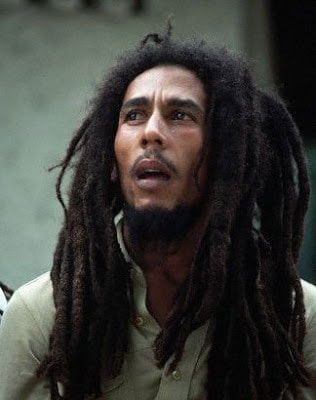
  • Dreadlocked Rastafarians sitting by the roadside (Check the deadlocks of Jamaican legend Bob Marley)
  • Beachcombing on Lime Cay
  • Playing scrabble with our American neighbor's 12 year old son Felix for hours by the pool (the kid was a genius!)
  • Eating paw paw fruit and mangoes. With paw-paws all I could think of was the enzyme papain and its use in blood bank serology!
  • Climbing Dunn's River Falls on the north shore
  • Reading everything I could about Jamaica's history;
  • Eric killing a lizard who had taken up residence in our bathroom with a machete (my Mom only wanted him out, not dead)
  • Listening to tales spun by neighbors Hamish and Myra from Scotland (he with Lloyd's Bank)
  • Trips through Fern Gully on the way to Ochos Rios
  • Upon entering a resort at Ochos Rios, my young cousin Wendy exclaiming, "Pat - it's just like the movies!"
  • Seeing the red bauxite red mines that blight the landscape (and offer jobs)
  • How many families were headed by women, with mothers working and grandmothers taking care of the children
  • Giant flying cockroaches (sometimes hiding in kleenex boxes) and the odd scorpion
  • My cousin Wendy and I lying in bed at night with the lights on scanning the walls and ceiling for the dreaded cockroaches or harmless geckoes
  • Blue Mountain coffee with a chaser of Tia Maria
  • Political figures such as Norman Manley, Michael Manley, and Edward Seaga
  • Reggae music - The legendary Bob Marley & The Wailers: 
  • "Houston, Tranquility Base here. The Eagle has landed."
Most of all, my brief 6 months in Jamaica were memorable for seeing another culture up close, one with a history of exploitation and extreme poverty, pockmarked by tourist resorts of great wealth.

I have never forgotten what Jamaicans would say if the mail was late or the electricity was off: "Soon come, mon." All in all, a pretty good philosophy.

Red Cross emblem to be neutered?

The headline reads "Red Cross mulls 'neutral' emblem".

They're calling the proposed new emblem a red crystal but it looks like a diamond with a hole in the middle. Apparently, the only two emblems currently recognised under the Geneva Conventions are the red cross and red crescent. Relief workers and ambulances bearing these symbols are protected under international law.

It turns out that Israel uses a red Star of David (also its national symbol) and therein lies the rub:
  • Israel uses the red star for its relief organization, therefore
  • Israel is not allowed to be part of the Red Cross movement
  • Arab states will not accept the red star of David
  • They see the third emblem as an unnecessary accommodation of Israel

The issue seems artificial since the crescent is a universal symbol of Islam.

Doesn't arguing over emblems whose purpose is to protect humanitarian aid workers seem a bit nuts? The Asian tsunami and Pakistan earthquake with hundreds of thousands of people killed ... who gives a flying fig about what emblems are used by relief workers?

Saturday, October 29, 2005

Iranian rhetoric strikes again

Earlier this month I wrote a blog entry on "Wiesenthal's struggle remembered" about the ongoing presence of antisemitism.

Now the old pronouncement of Ayatollah Khomeini has reappeared:

The comments have been widely condemned but not so much in the Middle East (except for Egypt and the Palestinian Authority):

As usual the perpetrators claim the remarks are not anti-Jewish, just anti-Israel and anti-Zionist.

Update (Dec. 2006): Now Iran has sponsored a holocaust conference whose purpose is to deny that the holocaust happened. I agree with Canada's Prime Minister:

Google's satellite maps

If you haven't tried it yet, try Google Maps on your home town or a world capital that you have visited.

  • Enter a city in the search box (e.g., Edmonton or London - it's great!) and hit SEARCH.
  • Then select HYBRID, which brings up a combination of the street map and satellite image.
  • Hit the + sign to zoom in or the - sign to zoom out
  • Click and hold mouse button to navigate map (or use the arrows)
  • Select MAP for the normal street map view

It's pretty cool and really gives a sense of where things are in relation to each other, where the green spaces, rivers and lakes are, and what the buildings are like.

Interestingly, the satellite feature has raised security concerns in India:

Zooming in can reveal cars, boats, etc., which reminds me of a scene from John Le Carre's Little Drummer Girl - I think - where real-time satellite images were used to identify a training camp in the desert and target individual terrorists.

More about Google's satellite images

Monday, October 03, 2005

Wiesenthal's struggle remembered

Simon Wiesenthal has died and his passing is a watershed in the history of the Holocaust and its aftermath. He survived the Nazi death camps and devoted the rest of his life to bringing the perpetrators to justice, achieving considerable success:


Historical Perpective

For some reason I have always been interested in the history of WW II. Perhaps it's because so many of my relatives fought in it, some becoming medal-earning heroes, some suffering in prison camps for 4 long years, and all being indelibly marked by the experience.

Maybe it's why I started to read everything I could about 20th C European history, especially that of Germany and England. It wasn't long until I became fascinated by how citizens of one of the most cultured nations of the world could first elect Hitler to power and then actively or passively accept his "final solution to the Jewish problem":

Of course, Germans during the Third Reich weren't the only ones to target Jews, as violent attacks against the Jews (pogroms) flourished in Russia and Eastern Europe, notably Poland, in the 19th C and early 20th C.

Role of German Physicians in the Third Reich
To me, one of the most striking realities of Hitler's reign was the role played by physicians. For example:

Today, anti-semitism occurs pretty much everywhere and seems to be on the rise in Europe.

Could a holocaust happen again? Absolutely, unless we all recognize antisemitism and work to combat it:

Murder at 30,000 feet?

Have you seen the news that using cell phones on airplanes will soon be possible. Isn't that great?

I love what Thomas Friedman (NY Times columnist and author) wrote in several of his books and said in this speech about overconnectedness:

"If I'm being bombarded constantly by people wanting to get in touch with me, I, frankly, can't think.

Now, I don't know about all you, but people call my office and they say, "Is Tom Friedman there?" My secretary says, "He's not in." They say, "Well, connect me to his cell phone or his pager." The assumption now is that you are always in. You are never out anymore. Out is over. Forget about out. You are always in now. Of course, if you're always in, it means you're always on, and if you're always on, what are you like?

What else is always on 24/7, 365? Well, of course, a computer server. I, frankly, don't want to live my life like a computer server."

Friedman then goes on to discuss continuous partial attention, a term coined by Microsoft's Linda Stone. See

As a former instructor I know that being on all the time is stressful. And being constantly bombarded with external stimuli like e-mail, television, and loud music is stressful. How much stress can we take?

Which leads me back to cell phones on planes: Just think of it. Passengers all over the plane loudly letting us know how important they are by calling whomever about whatever throughout the flight. Scrap road rage. How about flight fury?

Murder at 30,000 feet may become commonplace (at least in our minds)! <8-)

Physicians who respect co-workers

Dr. Donald Buchanan (1914-1988), Medical Director of the Edmonton Blood Transfusion Service from 1949 - 1979, who did pioneering work in immunohematology (on the -D- and Fy3 phenotypes, as well as Diego and Lutheran blood groups) has been honoured as one of Alberta's


Dr. Buchanan was a remarkable man, and one of his most remarkable traits was that he treated medical laboratory technologists with respect and honored their expertise. For many reasons he was an inspiration to those who had the privilege to work with him and is most deserving of being a Physician of the Century.

Isn't it sad that treating other healthcare professionals with respect is a mark of distinction? What does it say about many (not all) physicians? Are things different in the 21st C? Just wondering....

Monday, September 19, 2005

PubMed goodies

PubMed has recently developed these new features:

1. NCBI (PubMed) toolbar
The NCBI (includes PubMed) has a toolbar (in beta testing) for use with either Internet Explorer or Mozilla Firefox.


If you use Google's toolbar, the NCBI toolbar is similar. Instead of choosing to search the web, news, images, etc., (as in Google), the NCBI toobar allows you to select from several databases (PubMed, gene, nucleotide, all). As in Google, you can also highlight your search terms.

2. Automatic e-mail updates
PubMed now offers automatic e-mail updates in conjunction with saved searches, which are now called "My NCBI" (formerly "cubby"). NCBI is the National Center for Biotechnology Information at the US National Library of Medicine.

The e-mail updates automatically notify you when new papers are published with your search criteria and can be scheduled for various periods (daily, weekly, monthly). It's a nice feature for monitoring the latest literature. You can also log-in and run your saved searches at any time.

3. And don't forget Full text articles in PubMed
PubMed Central provides access to journals that provide free full text articles but did you know that a better way to get free full text articles is by using PubMed's "Search Field Descriptions and Tags"?

Enter search terms as usual in PubMed and add (exactly as shown):
AND Free Full Text [Filter]

Try this search:

transfusion AND platelets AND 2004:2005[dp] AND English[la] AND Free Full Text [Filter]

Pretty cool, eh? Of course, to get all of the important literature you will still need to drag your sorry you-know-what to the library! <8-)

Tuesday, September 13, 2005

"Honour killings", say what?

I've been following so-called honour killings - mainly in Muslim communities - for some time. What's it about? Here's what the BBC says:

Yet they go on and on and on....

A few examples:

Now comes this from the West Bank in Palestine:

My take on such killings? Societies everywhere need to bring the perpetrators of such murders to justice.

Surely, it cannot be the culture in these countries. With apologies to Churchill, "Some practice! Some culture!" If killing under any circumstances is a crime to be condemned, why do these killings continue? I don't get it.

Transfusion websites

If you are a healthcare worker involved in blood transfusion, check these sites out:
One has loads of resources and the other a disussion forum.

If you're not into transfusion, take a hike, eh?