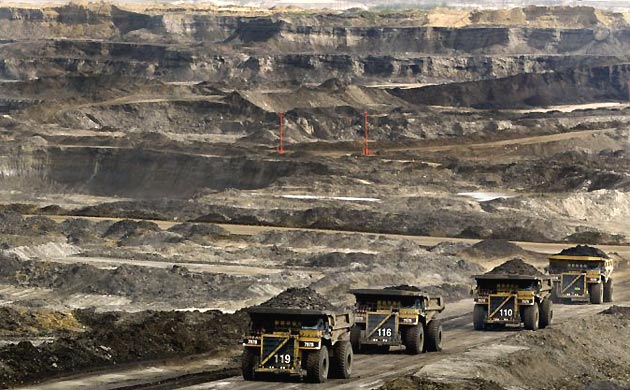
Saturday, December 03, 2011

Pathologist error: Double standard for docs & lab techs?

Pathologist error happened elsewhere:

And now significant pathologist error has hit my city:
Apparently the pathologist was substituting for another doctor over the summer. According to the news item:
"Of the 126 retests completed, 51 had no discrepancies with the pathologist’s initial report, 46 had minor discrepancies and 29 had substantial discrepancies."
If the subset of biopsies already retested is representative of the 159 prostate biopsies (or 1,568 non-prostate specimens), the pathologist made serious errors on 23% of the tests examined.

For interest, in the transfusion service laboratory (TS) when it comes to ABO grouping of patients, where errors can cause serious morbidity and potentially mortality, the margin of error allowed for medical technologists during competency assessment is zero, i.e., all ABO groups must be interpreted correctly.

Anyone hired to work in the TS lab, whether as fulltime, part-time, or casual staff, would undergo orientation during which they would be oriented to the lab's policies and procedures, retrained on basic theory and practice as needed, and undergo comptency assessment before being allowed to work independently with the same arms-lenght supervision as experienced staff.

If the medical laboratory technologist had not worked in the discipline for awhile, it's guaranteed they would be retrained before being 'let loose on patients.'

QUESTIONS

#1. Did the substitute pathologist have current experience reading prostate and other biopsies? If not, was retraining provided?
My guess: No current experience otherwise there would be many tests to re-examine over multiple years. No retraining because physicians, unlike other health professionals, seem to be exempt from re-training unless they emigrate from foreign countries or were discovered - after the fact - to have made major errors.
#2. Were the substitute pathologist's assessments checked by a second pathologist or were they reported "as is"?
My guess: Reports were unchecked and reported 'as is." There are no built-in processes to check physician error, except in retrospect when things go drastically wrong.
#3. What is the root cause of this screw-up?
My guess: Pathologist shortage.  ( Lots of evidence )
Are Edmonton pathologists now so overworked and in such short supply that physicians near retirement, who may not have current experience, are hired as substitutes so others can take much needed vacations?
Contributing factors: Double standard for physicians, who do not have to undergo the competency assessment that lab technologists do AND whose work seldom, if ever, has built-in system checks designed to detect errors.
SUMMARY

1. A substitute pathologist made multiple serious errors that impact patient care.

2. So far, all that happened is that he or she retired.

3. The pathologist's name will likely not be released since quality systems (QS) is now an integral part of health care. QS is a non-punitive system designed to foster staff revealing errors in a safe environment.

4. Alberta's College of Physicians and Surgeons releases names only if the physician is part of a disciplinary hearing open to the public.

5. Alberta's Health Quality Council will investigate. Will it provide a full public report of what happened? Who knows. I hope so, including answers to the 3 questions above.

MUSINGS

As a life-long transfusion science educator, I am often struck by how physicians are not required to meet the same standards of competence as medical laboratory technologists. Fact is, physicians who treat patients (clinicians) can prescribe transfusions in a total state of ignorance. They typically have little education in transfusion medicine.

The blood system relies on lab technologists to monitor inappropriate transfusion orders and draw them to the attention of the physicians (often hematopathologists) who serve as medical directors of transfusion services in Canada's urban centres. In smaller centres that lack technologists who are transfusion specialists, there are no checks on the incompetent ordering practices of clinicians, except in retrospect if things go dramatically wrong.

Tidbit: My experience in tranfusion service laboratories and blood centres is extensive. However, if I wanted to work in one today as a medical laboratory technologist, I would not be allowed to without providing clear evidence of continuing competency to the Alberta College of Medical Laboratory Technologists. And once on the job, I would receive extensive retraining.

If my assumptions about the substitute pathologist are true (and it's big if), would the harm to patient safety exist if pathologists had to demonstrate the same competency as I would before being let loose on patients?

Friday, August 12, 2011

Silencing USA! USA! chants (Musings on 2011 FIFA Women's World Cup)

I love soccer ('football' outside of NA) and the 2011 FIFA Women's World Cup in July was a delight to watch. Amazing how much entertaining drama such international events can generate. It's taken awhile, but I'd like to offer some musings on the tournament, particularly the play of the Japanese and American teams and my reaction to chants of USA! USA!

Germany, arguably the best women's team in the world heading into the tournament and the two-time defending champions, was favoured to win, especially playing on home turf. They had not lost a game since 1999. What a shocker to see little Japan beat them 1-0 in extra time during the quarter finals despite the added disadvantage of a strongly pro-German crowd. But the win foreshadowed what was to come in the final against the USA team, also a tournament favorite.

MUSINGS ON HEIGHT

I say 'little Japan' because most of their players are inches shorter than others, especially opponents on the German and USA teams, some of whose members are amazon-like. For example, the average height of the Japanese women is 5'4'' versus 5'7' for USA players. Japan's veteran star midfielder Homare Sawa is 5'5'', compared to the USA's prolific scorer Abby Wambach, who is 5'11''. Japan's midfielder, Aya Miyama, who scored in the final, is only 5'2''. Germany's legendary Birgit Prinz, although not a factor in the tournament, is just over 5'10''.

Being short has significant implications in soccer:
1. Short players have to run many more steps than taller opponents.

2. Short players seldom or never win challenges for the ball involving headers.

3. Short players seldom score on headers, a gold mine of goals from set plays such as corners.

4. Short players are typically much smaller overall, hence tall players can usually physically 'muscle' short ones off the ball.

5. Short players usually lack the power of taller ones and kick balls with less force and speed.

6. A short goalie is disadvantaged with a shorter reach. Tall 'keeper's' can stretch farther and protect more of the goal. Japan's Ayumi Kaihori is under 5'6'', whereas Hope Solo, the best goalie in the tournament (and arrogant at times), is 5'9''.
Yet Japan (ranked #4) beat the taller and physically stronger German and American teams.

MUSINGS ON CHANTS OF "USA! USA!"

Like many around the globe, in the final I cheered for Japan, the clear underdog. But it wasn't just a case of cheering for David against Goliath.

During the tournament, as in most international sports events, whenever the USA plays, chants of USA! USA! are bound to arise. Many American fans attended the 2011 FIFA tournament, not just American tourists, but also due to the presence of the US military in Germany. Since 1984 and the Los Angeles Olympics I've detested these chants.

It began when watching a volleyball game. I forget if it was men or women but the USA was playing a team from a small Pacific Island nation. As you can imagine, it was a rout, with the USA team being so much better. Yet the American fans in LA constantly chanted USA! USA! and never once cheered or clapped when the outclassed opponents from the tiny island nation made a good play.

The Yanks in the LA crowd seemingly had no sense of fair play and no appreciation for the game. Like bullies, they relished in the beating up of a runt, exhibiting chauvinistic patriotism, where only winning matters.

That's what USA! USA! has reminded me of ever since, including in the German FIFA women's tournament. (I won't go into the sickening feeling generated by over-the-top political use of USA!USA! by mostly right wing supporters at American political rallies, as if only Republicans and Tea Partiers are patriotic.)

For fun, this is a Canadian crowd chanting USA! USA! to recognize the great effort of the US women's hockey team in winning the silver medal at the Vancouver 2010 Olympics. It's during the medal ceremony after Canada beat them in the gold medal  game.

KUDOS to the YANKS
The pro-American crowd's USA! USA! chants aside, there are many admirable things about the US women's soccer team. Some that impressed me:

1. Abby Wambach is a class act.
Not only did she show sportsmanship throughout all the games, give interviews after the games that acknowledged opponents, e.g., after the USA won over France in the semi-final, she noted that France played better than the USA at times (No kidding! France outshot the USA 25 to 11.)
I was especially impressed that, even after the USA lost the gold medal game to Japan, which was a heartbreaker to Americans, Abby still showed good sportsmanship to those Japanese players who, like her, had won awards. She lent a helping arm to guide them into posing for photos, a joy to behold.
2. Besides Wambach, the team has many excellent players, including Megan Rapinoe. I've never seen anyone better at delivering corners. In the game against the talented Brazil squad, she saved the USA with a perfectly placed pass to Wambach, whose header tied the game at the 122'' minute mark (into injury time at the end of overtime).

Singing 'Born in the USA' after the win over Columbia was a bit much, but she has overcome setbacks and comes from a working class family who sacrificed for her.

3. Despite the high stakes, the final against Japan was a friendly match, with players on both sides, taking time to say 'sorry' and check on opponents after bringing them down by accident or on purpose. Nice to see, especially from Americans, who so often are focused on win-win-win at all costs. Both Japan and the US soccer teams showed great sportsmanship.

4. US coach, Pia Sundhage, a Swede, is a delight. After each game she always took time to praise her players and assistant coaches, and give credit to opponents.
5. The American team played its heart out in the final and had many chances to put the game out of reach early on. If they had scored on their opportunities, they would have won and been deserving winners. But they didn't.

You could say the Americans 'choked' in not capitalizing on their chances and then fell totally apart in the penalty kicks. Or you could say that Japan created their own miracle by never giving up and playing well throughout the tournament.

BOTTOM LINE
As a sports fan I rejoiced when the wee Japanese courageously came back to tie the game twice in the final with the USA and then win on penalty kicks.

Congratulations to Japan - Prior to the World Cup Japan and the USA had played 25 games, with Japan winning none (22 US wins and 3 ties). But on the days it counted they beat Germany and the USA without the advantages of height and power, not even the support of the spectators. Japanese players have the right stuff, the stuff of champions.

They are most deserving winners. Did I mention the Japanese team also won the tournament's Fair Play Award? They played the fairest of any team, getting just five yellows and one red card. After every game, they showed this banner to the delight of the crowds:
This summary of the tournament says it all:
What did it take? Skill, skill, and more skill. And most of all, heart. The Japanese gave 100%+ game in and game out against great odds. They didn't know the meaning of 'quit.' Their exemplary attitude, perseverance, and skilled play silenced USA! USA!

As always, comments are most welcome.

Sunday, June 05, 2011

CBC 'brown noses' PM Harper

Why did CBC broadcast Jian Ghomeshi's 30-minute interview with Stephen Harper about the PM's love of hockey before the 2nd game of the Vancouver-Boston series? It gave the 'pygmy PM' a kazillion $ worth of free publicity. Was it to ingratiate CBC with Harper who threatens to axe Canada's national broadcaster?

Friday, April 29, 2011

Left shift spawns Henny Pennys

The rise in the polls of Jack Layton and the NDP in the run up to Canada's 2011 federal election has made Henny Pennys of those whose world order is threatened. Witness 'Layton as PM a frightening scenario,' an editorial in the Calgary Herald, reprinted in the Edmonton Journal.

However, contrary to the editorial's headline, the sky does not fall in when the NDP forms governments. Unfortunately, facts do not stop Tory spin doctors and their surrogates from using the politics of fear.

When Gary Doer, Canada's ambassador in Washington, was premier of Manitoba (1999-2009), he won two successive re-elections, each time with increased majorities, and consistently introduced balanced budgets. Saskatchewan's NDP government (1991-2007) also showed fiscal responsibility with 11 consecutive balanced budgets. In 2005 the federal Dept. of Finance released a report on federal and provincial budgets over the past 22 years that showed that NDP governments had the best fiscal track-record among all parties.

Older readers may recall that in 1962 Saskatchewan's doctors screamed like 'chicken little' and went on strike claiming that 'socialized medicine' would be so intolerable as to leave the province without doctors. By 1965 most doctors supported medicare and the model was implemented across Canada within 10 years.

Stephen Harper's Conservatives are expert practitioners of the politics of fear and practice a "course, vicious brand of politics" (to quote Maclean's editor Andrew Coyne). Indeed it's their stock and trade. Witness their focus on crime and building more prisons, despite the fact that crime, including serious crime, is declining in Canada.
On May 2 Canadians should not reward those who twist facts and try to scare us into voting for them. The sky is not falling in. Have courage. We should not believe everything we are told by the Henny-Pennys of this world. Otherwise the fox will have us all for lunch.

Harper on Gretzky: He didn't come back for you...

Stephen Harper's Tories create nasty attack ads that hurl personal insults at Michael Ignatieff and distort reality for their partisan goals. One ad implies that spending time living and working outside Canada is unpatriotic ("He didn't come back for you." - Robert Fulford's take). Nothing about Liberal policies, just a personal slur. That's our PM, folks.

I wonder if hockey fan Harper would toss that accusation at Wayne Gretzky (aka 'The Great One'), who has lived in the USA since 1988? Gretzky, the great traitor, he didn't come back for you.

People's Republic of Albertastan

Updated: 6 May 2015 (Fixed broken links)
Albertans tend to vote overwhelmingly Conservative to the point where the province is sometimes derisively called Albertastan. The name is a take-off on the many one-party "stan" states in central Asia, mostly former Soviet republics.

Sadly, many Albertans take the view that people who do not vote Conservative are not only misguided but also dangerous and unpatriotic. Such intolerant views would be at home in the former USSR where 'dissidents' were treated as pariahs. Such citizens think that it's intolerable that Alberta has one non-Tory seat, Edmonton-Strathcona, ably represented by Linda Duncan. They don't comprehend that democracy means respecting the views of all and that diversity of opinion is a strength.

Intolerance and related 'group think' can bully people into voting Conservative. Others may vote Conservative because they want to vote for the winning side or to vote as they perceive their bosses vote. Some Albertans may vote on a single issue such as the economy, believing that only a Tory government can keep it strong. Such voters conveniently forget that the Liberals left Harper with a solid economy and surplus and that our sound banking system, not Stephen Harper, protected us from the worst of the recent recession. I've heard many Albertans say they would like to support another party, but it seems hopeless given that one vote cannot change anything here.

In the 2008 election 58.8% of Canadians voted (province by province results). Conservatives won 37.6% of the votes, with 62.4% voting for other parties. In our 'first past the post' system, Conservatives "won" and formed a minority government with the support of only 22% of voters.

So, if you are an Albertan thinking of voting Green or Liberal or NDP, you are not alone. Indeed you are in the majority nationally. Your vote matters as much as those who vote Conservative.
To paraphrase Rick Mercer's recent 'vote rant' that spawned the vote mobs on university campuses:
  • If you're 18 or older and breathing, and you want to scare the hell out of those who run this country, do the unexpected and what people around the world are dying to do: Vote. Especially vote for the party of your choice, the one that best represents your views on a range of issues.

Canada's PM pushes asbestos for votes

On 26 April 2011 articles in many Canadian and foreign papers reported that Canadian PM Stephen Harper had a campaign stop in Asbestos, Quebec in which he supported allowing Quebec's asbestos industry to export its product abroad:
The World Health Organization estimates that more than 107,000 people die of exposure to asbestos annually. Quebec's asbestos industry employs 500-800 people. And we wonder why Canada's reputation around the globe is in shreds. Harper supports Canada as an immoral exporter of death to poor countries.

Is there anything our PM won't do for a vote? Do Canadian jobs trump killing others? Anyone who votes Conservative needs to know what Harper stands for. And why was there no mention of Harper's Quebec campaign stop to support asbestos exports in the Edmonton Journal? Aren't newspapers supposed to keep citizens informed about the activities of the government?

Monday, January 24, 2011

The Facebook dilemma

A friend recently asked why I left Facebook (FB). Many have written about their FB dilemma, and why they leave, join, leave, join. Several things bother me about FB - here's a few:

1. Privacy: Ongoing privacy issues with its app developers (they get your info then can sell it to others). FB keeps backing off when caught but the young geeks in charge really do not get the privacy issue and I do not trust them.

2. Advert magnet: FB's core business is to create communities to whom advertising can be targetted. It can do this since FB knows a great deal about its users. I'm against this insidious practice in principle.

Truest quote I've heard about FB was on CBC radio awhile ago. About free social media sites like FB,  a social media expert said , "If it's free, what they are selling is YOU."

3. Quasi-voyerism: FB is supposed to be a social medium, but, like mailing lists, most people lurk and make few, if any, posts. No communication, no interaction, just a kind of harmless 'voyeurism', presumably getting pleasure from glimpsing the lives of others. The volume of genuine personal interaction among the 'friends' compared to deadening silence (or total drivel) is low.

4. Friends - really?  Once on FB, you get many friend requests from people who in no way are your friends. Indeed, some barely know you and some you may not have even gotten along with that well. It's hard to refuse a 'friend' request because you know the person will not understand, may be hurt, and just wants to touch base with a colleague or acquaintance.

Yet it's ridiculous to give virtual strangers access to your daily activities, thoughts, and feelings, assuming you use FB as a true social medium. I do not like dealing with this dilemma time and time again.

5. Posing: FB lends itself to posing and posers. Naturally, all users tend to reveal the parts of themselves they want others to see, i.e., their admirable selves, their bragging points, etc. FB is somewhat akin to those Christmas cards with long updates that some people send in which their kids are practically Nobel prize winners and they are happily planning their annual family get together in the hills of Tuscany. It's all harmless, but the hypocrisy tends to get to me.

6. Time waster: FB can easily become a huge time waster as you scroll through the drivel to get to the gems. Since our time on earth is finite, time on FB must be assessed against other activities. In most (not all) cases, FB loses. To me, few, if any, important things in life happen in front of a computer screen.

That said, now that I've left, I truly miss interacting on FB with my friends. The choice to opt out of FB was not an easy one. Most people just go with the prevailing flow (500 million users and growing), but I've never been good at that. I often think of returning but have resisted so far.
 
Currently, I'm trying a new experiment with twitter. Follow me here: http://twitter.com/bogeywheels

Sunday, December 26, 2010

Why is everything always "under investigation"?

The holiday season seemed like a good time to get a trivial language matter that has bugged me for awhile off my chest.
Have you noticed how when the police (or any group) investigate a possible crime or issue, the media invariably report that the matter is "under investigation"? Why do they never say that something is being investigated?
Using a similar grammatical construct, some examples of why "under investigation" and similar are a poor use of language:
  • "Whether Canadians prefer hockey to football on Monday was under discussion at the conference." vs "Whether Canadians prefer hockey to football was discussed at the conference."
  • "The hospital's new computer system is under implementation in January." vs "The hospital's new computer system is being implemented in January."
  • "Our massive transfusion policy is under review." vs "Our massive transfusion policy is being reviewed." vs "We are reviewing our massive transfusion policy."
  • "Our dinner was under consumption when the cops arrived. " vs "Our dinner was being eaten when the cops arrived." vs "We were eating dinner when the cops arrived."
  • "My eyes were under examination by the optometrist." vs "My eyes were being examined by the optometrist." vs "The optometrist examined my eyes."
Journalism schools should promote the benefits of forceful language.

Or maybe I should write, "Journalism schools should put the benefits of forceful language under promotion."

It's up to you, the readers, to put the issue under decision... oops...make that "to decide".

Monday, September 27, 2010

When journalists praise 'bottom feeders'

Gary Lamphier's column of August 18, 2010 ('Cash Store rings in new phase of success') failed to elucidate how companies that charge high interest rates for short-term loans operate nor provide details of the legal troubles of Cash Store, which once operated as Rentcash and Instaloans.

Indeed, Lamphier's column reads as a promo for Cash Store. All he reveals about the business and its background is that

  • Some provinces have established clear interest rate caps for short-term loans
  • Loan rollovers have ended, and several class-action lawsuits have resolved, all of which "have finally cleared the air for Cash Store's investors."
He assumes readers are well versed in the nontraditional loan business and omits the company's past business practices that allow the vulnerable to quickly run up huge debts and that led to class action lawsuits. Would readers know that, when combined with interest, cheque cashing and broker's fees, the rate of interest charged by such companies can range to over 1000%? See
As well as profiling such businesses, details of the company's history of being sued would have provided readers with valuable insight. As but one example, in 2008 Rentcash settled an Ontario class action suit for $3 million.

The lawsuit alleged that brokerage fees, in combination with interest charged by The Cash Store and Instaloans on customer loans, constituted interest in excess of the maximum rate prescribed by the Criminal Code of Canada, which forbids charging interest rates of over 60% per year.

The fact that such services are legal, and that they serve a segment of the population, does not change the fact that cash-loan firms profit specifically from those in poverty. Among its services, Cash Store offers short-term cash advances for up to 50% of customers take-home pay and short-term loans against their Child Tax, Disability, Old Age Pension, and Employment Insurance. Clients are those who cannot exist from payday to payday, including the disabled and old age pensioners.

Cash Store says it provides full disclosure of fees, but a search of its website shows no information on interest rates and other charges. Cash Store may have altered its most exorbitant interest rates and fees, but it did so after being faced with lawsuits and changes in provincial regulations.

Readers may disagree on whether, at their core, such businesses are predatory and inherently unethical. To assess their services and record of behavior, we need information and context. Some say such companies provide a needed service. That could be said of drug dealers and loan sharks too. The only real difference is that payday loan companies are legal.

All Lamphier does is spread the word that Cash Store has become successful. Too often business reporters just keep score of who is winning and losing and gladly 'pimp' for the winners, even if they are 'bottom feeders' like Cash Store.

While it no doubt helps a reporter to be nice to those reported on, providing context would be appreciated. Otherwise, the public is surprised by events like the subprime mortgage crisis that led to a global banking meltdown while reporters were asleep at the switch. More analysis please and less cheer leading:

Saturday, August 07, 2010

Can we outsmart nature?

Canada's National Post has many columnists who deal in the realm of ideas. Despite often disagreeing with many of the NP's thought merchants, I read them all.

Today this column by George Jonas caught my eye:

In writing about the decision of the Cordoba Initiative to build an Islamic cultural centre, including a mosque, two blocks from 'ground zero' (site of the 9/11 attack in 2001) in New York City, Jonas concludes that, regardless of the current controversy*, they must build the mosque and we must allow it to be built.

* Controversy:

Jonas cites 'an old fable' as the reason why:

A sage on the riverbank rescues a scorpion that has fallen into the water. When the sage pulls it out, the scorpion twists to sting him and falls back into the river. The sage rescues it again, and the same thing happens.

The sage is about to rescue the drowning arthropod for the third time, when a disciple stops him. "Master," he says, "teach me. Are you no wiser than the scorpion to keep making the same mistake over and over again?"

"A scorpion must sting because it's a scorpion," comes the reply. "I must save it, because I'm a sage. Nobody's wiser than his nature."

Versions of the 'Scorpion and the Sage' are commonly quoted by those into transcendental meditation. Differences in the various versions tend to be trivial but the endings can create significant nuances. For example, here are three other endings:
  1. "It is the scorpion's nature to sting, but it is my nature to save."
  2. "It is the scorpion's nature to sting, and it is my nature to be helpful to all beings. If the scorpion keeps its nature even in the face of death, why should I give up my compassionate nature in the face of his sting?"
  3. "My friend, just because it is the scorpion's nature to sting, that does not change my nature to save."

In the context of the fable, I interpret 'nature' to be one's essential characteristics, qualities, and core beliefs.

While each ending has something to recommend it, I prefer the one cited by Jonas:

  • "A scorpion must sting because it's a scorpion," comes the reply. "I must save it, because I'm a sage. Nobody's wiser than his nature."

It's the last bit that gets me: "Nobody's wiser than his nature." Wiser interjects intellect, intelligence, and judgement into the equation.

Jonas seems to be saying that the we and they in the mosque issue, indeed all of us, are hard-wired to behave in a certain way (our nature). Even if objective analysis shows otherwise, all concerned will behave in accord with their natures.

Is this what he meant and is it true?

  • We cannot change our nature and are prisoners to it.
  • Our qualities* will always trump our intellectual findings. (*compassion and empathy vs. indifference and hatred)
  • Our core beliefs (e.g., the weakest among us deserve respect and help, not disdain) overpower critical analysis.
  • Emotions not only influence our thinking but rule our objective thoughts.
  • Our hard-wired nature dominates our ability to reason.

Does "Nobody's wiser than his nature" seem a truism that holds for most, if not all, major decisions made in life? Are personal characteristics, emotions, core beliefs always paramount when we make important decisions, regardless of what our intellectual, objective assessment determines?

Something to think about....


Update: Testing America's tolerance (Rex Murphy, National Post, 14 Aug. 2010)

Monday, July 12, 2010

Canada's shame (Pimping asbestos overseas)

Updated: 15 Dec. 2016 (to fix one of the links) 

Sometimes, and I hate to admit it, I am ashamed to be Canadian:
Another example of 'geld uber alles.'

Reminds me of people moaning about poor American tobacco farmers losing a living and how the US government subsidizes an industry that kills millions. Tobacco companies sell a deadly product to developing countries now that domestic markets have decreased.

Turns out Canada also plays this despicable game. Shame on us!

Friday, March 20, 2009

When journalists become apologists

Sometimes you read something in the paper that requires a response. This column on Alberta's oilsands qualified:
  • "Oilsands a poor excuse for world-class bogeyman" (Gary Lamphier, Edmonton Journal, Feb. 28, 2009)
Lamphier's column reminds me of this argument commonly used by apologists everywhere:

Yes, the war in Darfur is awful. And deadly. And ugly. And it creates a pressing humanitarian crisis that clearly must be addressed, from refugee camps to starvation.

We get it. We don't need the United Nations to tell us. But let's get a bit of perspective. Darfur has resulted in about 300,000 deaths. Accurate numbers of dead are difficult to estimate, partly because the government obstructs information gathering, but the death total doesn't even make the top 10.

Hey, WWII killed 6 million Jews to say nothing of 20 million citizens of the former USSR. The Khmer Rouge in Cambodia (1975-78) killed about 1.5 million, and the war in the Congo (1998-2003) resulted in 4.5 million deaths. Now, those are impressive numbers. You want a world-class humanitarian catastrophe? Sorry, you'll have to look far beyond Darfur.

Does that excuse the Sudanese government from its role in the disaster?* Of course not. But again, a wee bit of perspective.


Yes, Gary, let's get a grip. There are other environmental blights that dwarf Alberta's oilsands. But aren't journalists meant to seek truth and inform society? Are Albertans, Canadians, and the world at large better served when journalists like you take an apologist's view of a serious environmental issue and put smiles on the faces of oil executives?

Your oilsands column makes you just another PR flunky, an apologist whose role it is to whitewash and spin what's happening. The public deserves better.

Note: A shorter, edited version of this blog appeared as a letter to the editor (Edmonton Journal, Mar. 5, 2009): "Maybe not the worst but still bad"

Sunday, February 22, 2009

Alberta's dinosaur legacy

Why is the political right always so wrong? Latest example concerns Alberta's oil sands development. Have you ever seen the oil sands?

Alberta politicians like Premier Ed Stelmach brag that Obama is "speaking Alberta's language":

"Balancing the environment and the economy, investing in carbon capture and storage and technology. They're all things that Alberta has been talking about. That's good news for Alberta, good news for Canada and good news for all North Americans."
Really? The difference that 'Steady Eddy' does not see is that Obama talks about taking a broad approach to energy and the environment. Obama stresses that no one strategy will work - an effort has to be made on many fronts - but the emphasis needs to be on weaning us off gas, oil, and coal and pushing for more sustainable and cleaner sources of energy. See


In truth, our Premier takes the opposite approach to Obama. Out of short term self interest, he and his colleagues emphasize one thing - spending public resources on how to make extracting oil from the tar sands cleaner instead of how to wean us off fossil fuels. They continually grovel to oil companies, thinking of new ways to give them tax breaks and incentives.

Just like their Republican counterparts, in Albertastan it's all "Drill, baby drill!"

That's like screaming,


  • "Typewriters, baby, typewriters!" at the dawn of the computer age*
  • "Carbon paper, carbon paper!" when photocopiers came out
* See Tom Freidman on Meet the Press

The whole world suffers from such short sighted thinking. We need to take a broader approach and think of the

  • Energy of the future (The Economist, June 2008)
  • The best thing that rich-world governments can do is to encourage the alternatives by taxing carbon (even knowing that places like China and India will not) and removing subsidies that favour fossil fuels.

By clinging to fossil fuel, Alberta's dinosaur politicians are leaving us all a sad legacy.

Further reading

Friday, December 05, 2008

Canada's pygmy Prime Minister

Canada is in the midst of a political crisis:
It's true that Canadians did not vote for a coalition of Liberals and NDP headed by Stephane Dion (a decent man but weak leader who Canadians rejected in the Oct. 14 election) and supported by the Bloc Québécois. Neither did we vote for right wing doctrinaire (old Reform Party/Alliance) policies like banning pay equity or removing the right to strike of public employees under the guise of belt tightening needed for the upcoming recession that Harper kept insisting did not exist. Moreover, regardless of the merits, choosing this time to unilaterally cut public funding for political parties was just plain nasty or stupid, probably both.

Yet Harper had his Finance Minister toss these into an economic update, something that most observers, including supporters of the Conservative Party, now describe as his "bully" gene or arrogance. Harper's decision clearly triggered the current crisis. Instead of an economic plan to deal with a crisis our PM opted for partisan attacks.

The opposition parties were astounded and reacted as would be expected. Let him get away with this in a minority government and who knows where it would stop. The trigger was the partisan attack, especially on their finances, which could cripple them, but Harper also chose to ignore the economic crisis and paint an overly rosy picture of Canada's economy.

They proposed a 2-party coalition. Unlike Harper, the coalition pledged to deal realistically with the economic crisis.

That's how parliament works - the government must have the confidence of the House of Commons or it falls. Rather than calling another election so soon over the last, a coalition can take power under our system.

But such a coalition would also inflame the West, which had voted overwhelmingly for the Conservatives. Westerners could view the coalition as a way to cheat them of their government. An added problem is that it would be headed by Dion, an ineffective leader who had agreed to step down in May 2009 after the Liberals had a poor showing at the polls. And, perhaps most of all, changing governments during an economic crisis seemed risky.

To combat his imminent defeat, Harper backed down on the triggering partisan ploys but to no avail. The opposition had had enough and no longer trusted him.

Accordingly, Harper ratcheted up the rhetoric. He decided to demonize the Bloc as evil incarnate, vile separatists about to destroy Canada, even though he has a long history of cosying up to them himself when he needed their support.
He said the Bloc was part of the coalition when it was not. He said the coalition leaders did not have a Canadian flag at their signing ceremony when two were there and easily visible. He plain lied.

This Harper tactic has stirred up latent Western alienation against Eastern Canada and Quebec in particular. His caucus was heard to sing "O Canada" during the crisis, which reminded me of McCain and Palin's right wing supporters chanting USA! USA! as if they had a monopoly on patriotism. Pardon me while I puke. Are we in for rallies where Conservative supporters chant "CA-NA-DA! CA-NA-DA!"?

Harper went to the Governor General and asked that Parliament be prorogued (suspended) until 26 Jan. 2009. This is the first time that a PM has ever suspended Parliament to avoid defeat. And in the midst of an economic crisis no less.


Here come the US-style attack ads.... They are guaranteed to be full of distortions and outright lies and name calling and he counts on us being stupid enough to believe them. Unfortunately, many voters can be swayed by such nonsense and a media blitz of attack ads.
His support is up.

Is this what's coming next from our PM in a month-long string of advertisements aimed at keeping power? That the Conservatives alone love this country and want what's best for it? Are supporters of the Liberals and NDP to become "The Others," not quite "real Canadians" but left-leaning socialists, just one step away from "Commie red b_astards"? Is that where he is heading, all in an attempt to save his own skin? You know they are short of ideas and valid arguments when the separatist and socialist labels come out.

When Parliament resumes in January, who knows what will happen. The coalition is unlikely to hold given that the Liberals are in the midst of a leadership race. If Harper gets his way, the hate mongers within his ranks will be out in force. Canadians of different political persuasions will be turned against each other. His supporters will be so aroused against a coalition that they will destroy opposition signs, attack opposition MP offices, and spit on coalition supporters in the street, or worse, since they are anti-Canadian. All in support of his keeping power.

Most Canadians just want our political leaders to show leadership and cooperate so that our government works. Harper had his chance earlier but blew it. No doubt he will now give the impression of wanting to consult and show respect for others. Can he be trusted? If history is prologue, the answer is no.

Frankly, Harper's actions in stirring up national disunity and in asking for Parliament to be suspended to avoid a non-confidence motion that would defeat him are undemocratic
. His mean and bullying behavior during the current crisis is what Canadians somehow seemed to know about him. It's the reason he has not gotten a majority government despite a weak and crippled Liberal Party.

HARPER'S CHOICE
  • Harper could have chosen to draw opposition parties into a common fight against the economic crisis.
  • He could have respected the views of all Canadians and solicited ideas from elected representatives of all parties.
  • He could have chosen greatness by cooperating and creating an all-party team of advisers.
He could have stepped up at this historic moment of crisis and chosen to be a giant.

But instead he chose to be a pygmy. Our PM has proven to be a small man indeed. Our Parliament is now suspended, all so he can retain power. His stature is forever diminished.


FURTHER READING

From fiscal update to prorogued Parliament in 7 days

Fanning the fires of national disunity

Charest warns against Quebec-bashing in Parliament crisis


Ottawa rhetoric likely incited sign burning, B.C. MP says

Emotions run high in the West


The first Liberal step: Replace Dion

Liberals try a new leader, Michael Ignatieff


Monday, November 24, 2008

2b mployble or not 2b mployble thats ?

Just caught this on BBC News about a 3-year research project in California:
The researchers also wrote a book based on their study: Hanging Out, Messing Around, Geeking Out: Living and Learning with New Media.

The authors conclude that adults should help children engage with digital media, thereby spending more time online since they are learning the skills needed to be successful in society. As a person who earns a living via the Internet, I strongly disagree, as explained below.

The project's 3 main objectives can be summarized as
  1. Describe kids as active innovators using digital media, not as passive consumers of popular culture
  2. Think about the implications of kids' innovative cultures for education and talk to educators about it
  3. Advise software designers about how to use kids' innovative approaches when building software
The authors provide 4 implications of their study:
1. Adults should facilitate young people’s engagement with digital media
"Contrary to adult perceptions, while hanging out online, youth are picking up basic social and technical skills they need to fully participate in contemporary society."
Translation: Help kids to spend more time on the Internet (and by implication, less time interacting face-to-face with people) - it's good for them.

2. Given the diversity of digital media, it is problematic to develop a standardized set of benchmarks against which to measure young people’s technical and new media literacy.
Translation: It's impossible to measure kids' media skills so we can claim anything without the risk of being contradicted.
3. In interest-driven participation, adults have an important role to play.
Translation: Adults - Stay out of a child's social space but it's okay to offer guidance if it's only their hobbies.
4. To stay relevant in the 21st century, education institutions need to keep pace with the rapid changes introduced by digital media.
Translation: Schools better get with the Internet and one way to do that is buy our book. Okay, this is a joke but the "sky is falling in" warning is still there.

To me, the major finding can be summed up in this sentence:
Contrary to adult perceptions, while hanging out online, youth are picking up basic social and technical skills they need to fully participate in contemporary society.
The findings are not surprising given the research objectives, particularly the first:
Describe kids as active innovators using digital media.
ASSESSING VALIDITY
If you set out to describe Drug A as an effective and useful treatment, chances are you will end up concluding that it is effective and useful.

But against what comparison? This study was observational and had no controls. In medical research the standard for comparing drugs is to have a control group as similar as possible to the test group (and chosen randomly). The control group is given what seems like the same treatment but is a placebo.

Where drugs are not involved, the same outcomes are measured in control groups who do not participate in the activity being investigated, e.g.,
  • students who took a course using the standard existing teaching method
  • people who lived at the same time in the same place as people who smoked or had junk food diets, etc.
Applied to the Digital Youth Research project, this would require a control group who did not use digital media nearly as much as the test group. Researchers would have had to measure in both groups a wide range of basic social and technical skills that were deemed as needed to participate in contemporary society and in real world situations, e.g., oral communication skills and interpersonal skills that are required when people interact face-to-face in society and on the job.

For doctors and other health professionals, this can include taking patient histories, discussing the risks and benefits of treatment options, counselling patients with depression, drug dependencies, and histories of sexual or physical abuse, etc.

For people who work in everything from hospitals to business offices to fast food outlets to oil rigs to garbage disposal firms to hair salons, this can include skills such as
  • bargaining with suppliers
  • supervising diverse staff
  • dealing with personality conflicts
  • resolving disputes
  • motivating people to excel
  • disciplining staff
  • dealing with customers
  • delivering speeches at meetings
  • writing business plans, memos, reports
BOTTOM LINE
Digital environments are not the real world.
  • Creating a web page using site-specific templates is not a good measure of creativity.
  • Interacting on Facebook by "poking" friends and writing chitchat or drivel on their "walls" is not real world interaction.
  • Using text messaging shortcuts to chat up a friend will not cut it in a real world job.
Boss to employee:
“WTF.. hm wut to say? l8 again? iono lol/well i left a note 4 u... ur so not a gr8 wrkr...u sud not giv me ne guff imho...cu l8r @4 k?"
Children do learn some computer skills online but not necessarily what's needed in today's workplace.

As a university instructor with 22 years experience and an "early adopter" of computers in the 80s and Internet technology in 1994, I saw that students who grew up in the digital age have all the trappings of being IT savvy but their actual skills are pretty shallow:
  • Most do not know how to use applications like Word and Powerpoint effectively (yes, they can type and save the file but that's not really having expertise).
  • None could use, let alone be proficient with, spreadsheets and databases.
  • Surf the Web, sure, but know how to evaluate website information critically, no.
  • Know how to be efficient with their web searches, no.
  • Create websites, maybe, using prefabricated templates, but truly develop web content, no.
  • Use a mailing list, yes, but know how to create one or to use one effectively, no.
  • Multi-task, absolutely, which means having the attention span of a flea.
  • Reflectively think about what they have seen and heard and read, absolutely not.
  • Use text messaging, yes, but write effective memos and reports, no.
WHAT EMPLOYERS WANT
Almost all recent surveys of employers find that graduates lack many soft skills such as communication as well as more measurable skills such as verbal and numerical reasoning. Examples of what employers want and are not getting:


UK - Graduates lacking soft skills, employers warn

"The world of work is very much based on relationships and we all have to deal with other people working in teams. That means they have to be able to communicate in different ways. You have to be able to negotiate and be able to interpret and listen, some people working in teams will have to take leadership roles."
Australia: Graduate opportunities

Skills that employers want:
  • Literacy and numeracy
  • Time management and organisation
  • Oral and written communication
  • Team work
  • Creative problem-solving
  • Initiative and enterprise
  • Critical and analytical thinking
  • Ability to apply discipline knowledge and concepts
  • Information gathering, evaluation and synthesis
  • Emotional intelligence; interpersonal skills
  • Adaptability
Honestly now, is more time spent in front of a computer interacting on social networks like Facebook or chatting online or text messaging friends or building an online personality going to develop these skills?

The researchers, all experts in their field, did an extensive 3-year study and identified valuable aspects of how children use digital media. But to conclude that adults should facilitate children engaging with digital media, and by implication,
spending more time online, seems a stretch. Such a finding is not justified by their data, given their research design, and a multitude of employer surveys.

Just for fun, here's a text message version of the Lord's prayer from the BBC website:
"dad@hvn, ur spshl. we want wot u want &urth2b like hvn. giv us food & 4giv r sins lyk we 4giv uvaz. don't test us! save us! bcos we kno ur boss, ur tuf & ur cool 4 eva! ok?"
Other websites I maintain:

Wednesday, October 29, 2008

Sad state of democracy in Alberta

Note: The Oct. 27. 2008 issue of the Edmonton Journal has a shorter version of this blog entry in its Opinion section.

In his column "We lack strong presence in Ottawa. With an NDP member elected, will Edmonton be punished?", Todd Babiak wrote, "The fact that this is a serious concern for any thinking person is worrisome for the future of democracy in this part of the country, which is in desperately bad shape and becoming worse with every election."

Kudos to Todd for pointing out that democracy in Alberta is all but dead. Not only are there Albertans who are not content with winning 27/28 electoral seats but apparently some think Edmonton-Strathcona should be punished for the gall to elect a non-Conservative. How pathetic, if it were not so scary.

Have any of the "elect only Conservative" populace ever wondered why Alberta had so few members in Stephen Harper's cabinet after the 28/28 sweep in 2006? Reasons include the
  • Quality of most elected Conservatives in Alberta
  • Fact that Albertans can be taken for granted if they repeatedly elect 100% of the party slate;
  • Need for a governing party to have a cabinet that reflects all of Canada
Alberta lacked a strong presence in Ottawa after electing nothing but Conservatives in 2006. Our one party voting pattern is pretty much a joke in the rest of Canada. Edmonton-Strathcona electing a high quality representative like Linda Duncan can hardly be blamed if Alberta is again treated with disdain by Harper with few cabinet members.

Maybe it's time for Alberta's school system to teach civics and what it means to live in a democracy? Many people here do not seem to understand the basics of how a strong opposition results in better government.

Sunday, October 19, 2008

Rahim served well, say what?

Another follow-up to Canada's Oct. 14 election and the winning of Edmonton-Strathcona by the NDP's Linda Duncan.

The Edmonton Journal editorial of Sat. Oct. 18 was headlined Jaffer served city well and paid tribute to Rahim Jaffer's time as an MP. After acknowledging that "No one should be taking anything away from Linda Duncan and her team of committed volunteers, who made a bit of history Tuesday," the editorial outlined Rahim's life story, focussing on what a friendly guy he is, a "likable sort and decent human being."

No doubt about it, Rahim is a good looking young man with a ready smile. He clearly enjoyed his time in Ottawa and was often written about as an eligible bachelor-around-town, appearing on lists of Parliament's laziest, sexiest, and hippest MPs. As the Journal editorial notes, "he was Old Strathcona, as a familiar fixture plying the streets, auberges, shops and theatres of the city's most vibrant neighbourhood. It was a natural fit, done with a broad grin."

I suspect that the Journal had a hard time coming up with any real accomplishments during Rahim's 10 years in Ottawa. All they could come up with was, "As to local achievements of late, Rahim's hand in securing federal support for Edmonton's Universiade bid played a major role." Pretty weak, no?

Frankly, the editorial ignored examining the whys of how this likeable young man could lose. As a resident in his constituency, one reason is his party's policies. Another is that he got elected at age 25 with few accomplishments, largely only possible in a province where you can run a corpse as a Conservative and get elected. Caught up in his invincibility, Rahim did not show up at an all candidates forum. Another reason is the fact that he had no substantive accomplishments as an MP other than being a great poster boy.

Contrary to what the Journal would have you believe, walking around, smiling, and looking good does not equate with serving well. Nor does being a nice guy.

Oh, and did I mention that his NDP opponent Linda Duncan has a lifetime of amazing accomplishments and public service?

See more comments on Linda Duncan's win....

In defense of opposing viewpoints

Note: The Oct. 20. 2008 issue of the Edmonton Journal has a shorter version of this blog entry in its Opinion section.

Canada had a national election on Oct. 14, 2008 and this blog is a follow-up to that event. It was triggered by an entry in the Edmonton Journal's Sound Off! section on Thursday, Oct. 16 by someone identifying herself as Jen.


As background, in the past few elections Alberta, an oil rich province with right wing politics, has elected almost all Conservatives to Parliament and in 2008 they were expected to sweep all 28 seats. There was only one Conservative loss in Alberta and it was in my riding of Edmonton-Strathcona, which encompasses the University of Alberta. The Conservative MP, 36 year old Rahim Jaffer, who had held the seat since 1997, lost to the NDP candidate, Linda Duncan.

I was saddened but not surprised to read Jen's comments in Sound Off! Her post began, "Ms. Duncan, you won't be speaking for Alberta in Ottawa. You likely won't be speaking for anyone since you are an NDP MP with the power to do squat."

Clearly Jen does not understand the role of alternative viewpoints in a democracy. Taken to their absurd conclusion, in Jen's world there would be no opposition MPs and our Parliament would be like the old Soviet Union or any other one party state. Perhaps in a world dominated by the Jens of Alberta, no political dissent would be tolerated.

Political opposition is fundamental to democracy. It allows citizens to resolve differences peacefully, keep the ruling party sharp, and forge solutions that encompass the views of all citizens, not just those that voted for the winning party. Without opposition parties, all we would have is a dictatorship that does the will of the majority. The rights of minorities and alternative viewpoints would remain at the mercy of the ruling party. Under such a system, how could we ever be persuaded to change governments?

The career of Howard Pawley in Manitoba is instructive. He first ran for public office in the 1957 federal election finishing fourth with 443 votes. In the 1958 provincial election, he received 801 votes, finishing third. In the 1965 federal election, he received 4,456 votes, finishing third. In the 1969 provincial election he won a seat as an NDP MLA. In 1981 Pawley became Premier of Manitoba, a post he held until 1988. In 2001 he was made an Officer of the Order of Canada.

In Jen's world, this man would be condemned as doing squat with his life, at least until he came a member of a ruling party.

Over the 31 years I have lived in Edmonton I have come across many Jens. At first I was shocked by the relative lack of diverse political views here and especially by the anger displayed by so many Alberta supporters of the then Reform party. I came to call them the "haters" because they were always so angry and literally detested those who dared to disagree with them politically. The joy of living in a democracy was lost to them. They were mired in a sea of resentment and spite against the dreaded Easterners and whatever other bogeymen local politicians cynically tossed up to ensure their re-election.

Jen compliments Rahim Jaffer on being a good representative in Ottawa. I'm not so sure about how good he was. Regardless, many good representatives lose elections, especially if they get caught up in their own celebrity.

The bilingual Rahim, a member of a visible minority, certainly was a poster boy for the old Reform Party in the days when it was known for its anti-immigration, anti-French elements. Lately he has become more known for being on lists of the hippest or sexiest or laziest MPs.

As a representative of Edmonton-Strathcona Rahim had minimal impact so far as I can tell as a resident of the constituency. Leading up to the election, we got weekly Conservative advertisements disguised as surveys asking us which leader we thought was better qualified to do this or that.


More than 20,000 people voted for Linda Duncan. She will be speaking for me in Ottawa, indeed for all citizens in our riding. From what I know about her she will be an exemplary, talented, hard working MP.

How is it that Albertans like Jen are not content with winning 27 of 28 seats? Jen sarcastically ends her Sound Off! comments with, "Ain't democracy great!"

Yes, Jen, it is.